How to Measure Your Dog for a Crochet Sweater
Disclosure: This post may contain affiliate links. If you make a purchase through these links, I may earn a small commission at no additional cost to you.
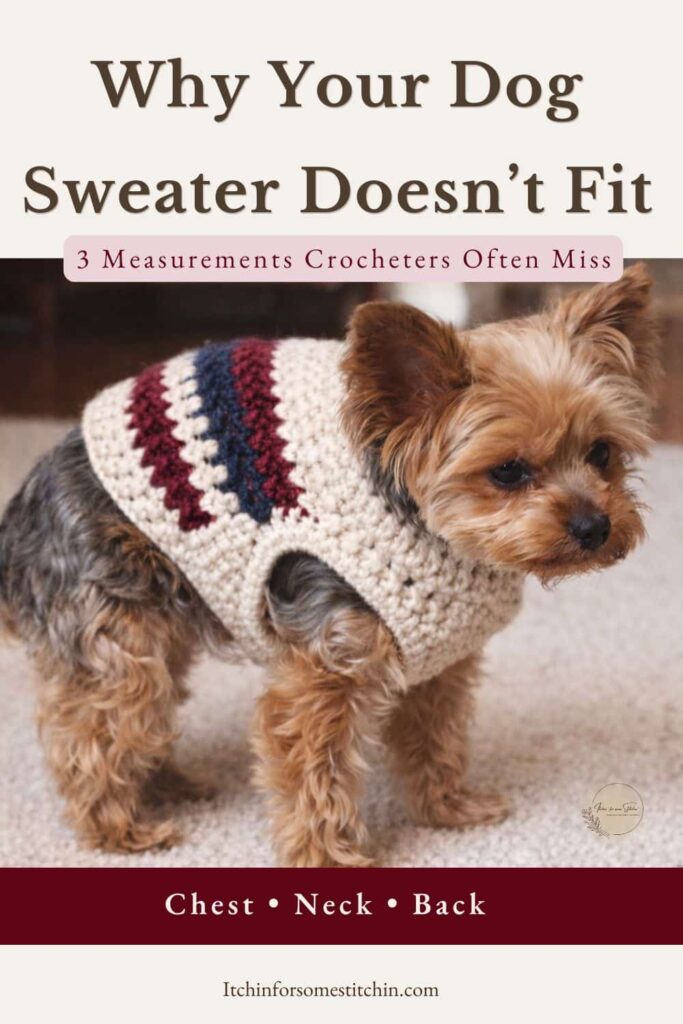
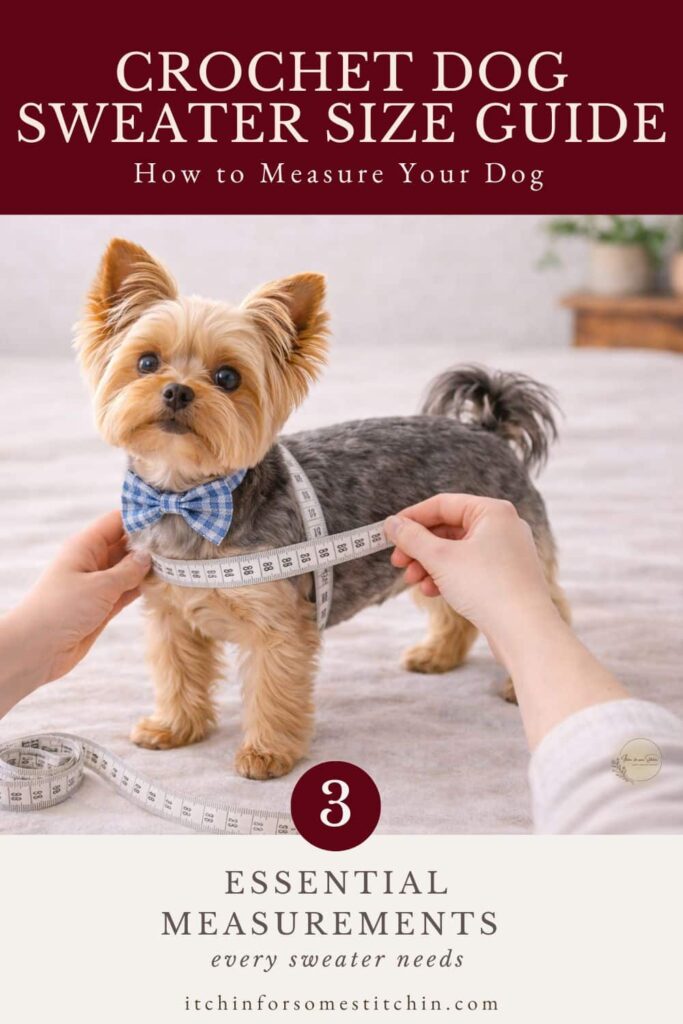
If your dog sweater never seems to fit quite right, the problem usually isn’t your stitches… it’s your measurements.
Learning how to measure your dog for a crochet sweater is the first step to getting a comfortable, well-fitting piece that actually stays in place.
In this guide, you’ll learn the 3 simple measurements you need — neck, chest, and back length — so you can stop guessing and start crocheting with confidence.
What You’ll Measure
To get the right fit, you only need three measurements:
- Neck Girth
- Chest Girth
- Back Length
These three numbers are the foundation of every well-fitting crochet dog sweater.
Measuring your dog carefully helps prevent sizing surprises later. In this simple dog sweater size guide, you’ll learn how to measure neck girth, chest girth, and back length so your crochet dog sweater fits comfortably from the very beginning.
Crocheting a dog sweater that fits comfortably begins long before the first chain stitch. It starts with understanding how to measure your dog for a crochet sweater in a way that reflects your dog’s actual shape.
Dogs that weigh the same can have very different chest girths or back lengths, which is why accurate dog sweater measurements make such a difference. Once you have these numbers, the rest of the process becomes much clearer—and the stitches themselves begin to fall into place.
Table of Contents
Dog Sweater Measurements Explained
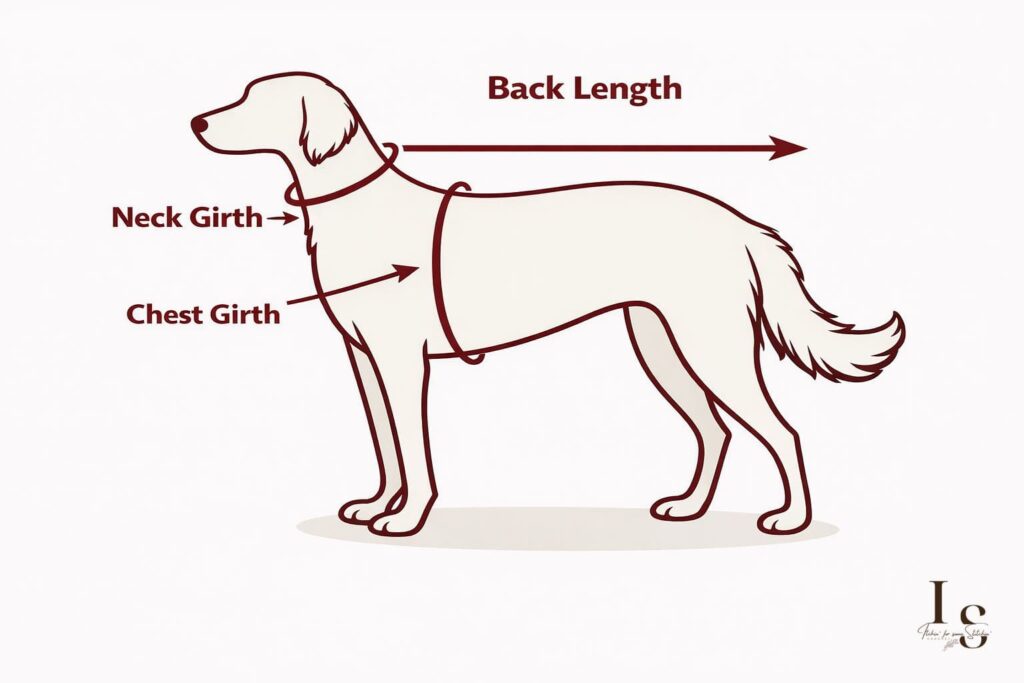
When people talk about dog sweater measurements, they are usually referring to three simple numbers: neck girth, chest girth, and back length. These measurements describe the basic proportions of a dog’s body and determine how a sweater will sit once it’s crocheted.
Because every dog is shaped a little differently, these measurements give a much clearer picture than weight alone. Two dogs that weigh the same may still need very different sweater sizes depending on their chest width or back length.
Once you understand these three dog sweater measurements, choosing or adjusting a crochet dog sweater pattern becomes much easier.
The 3 Measurements You Need to Measure Your Dog for a Crochet Sweater
When it comes to crochet dog sweater sizing, the good news is that the process is simpler than many people expect. A comfortable, well-balanced sweater usually comes down to just three measurements.
In this guide we'll walk through:
• Neck girth — measured around the base of the neck where the sweater collar will sit
• Chest girth — measured around the widest part of the ribcage just behind the front legs
• Back length — measured from the base of the neck to the base of the tail
These measurements tell you how the sweater will sit at the neckline, how it will wrap around the chest, and how far it should extend along your dog’s back.
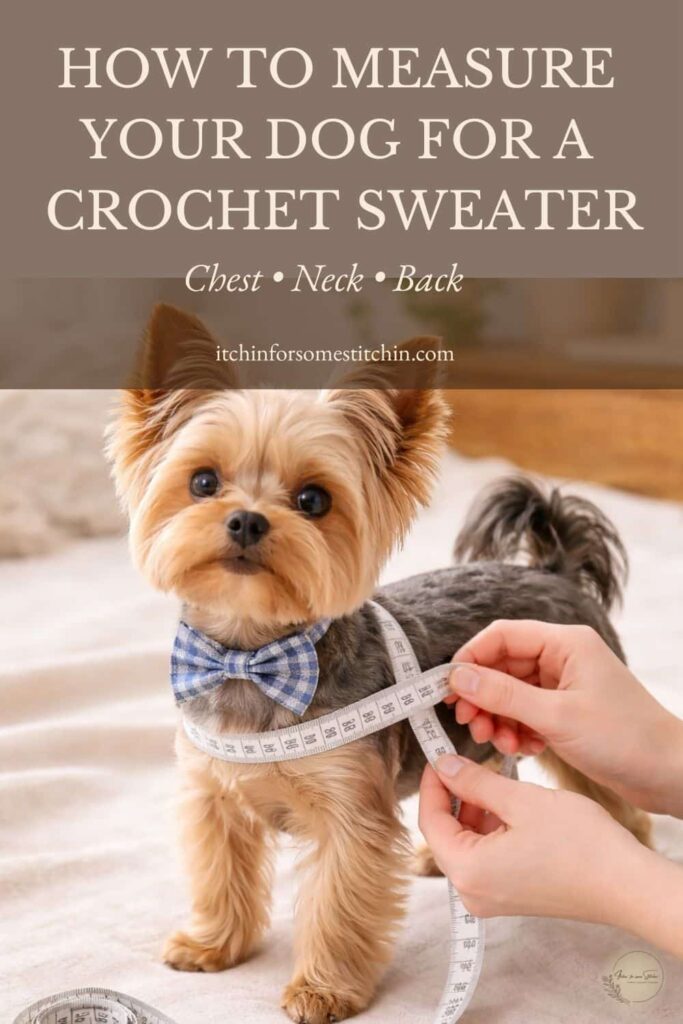
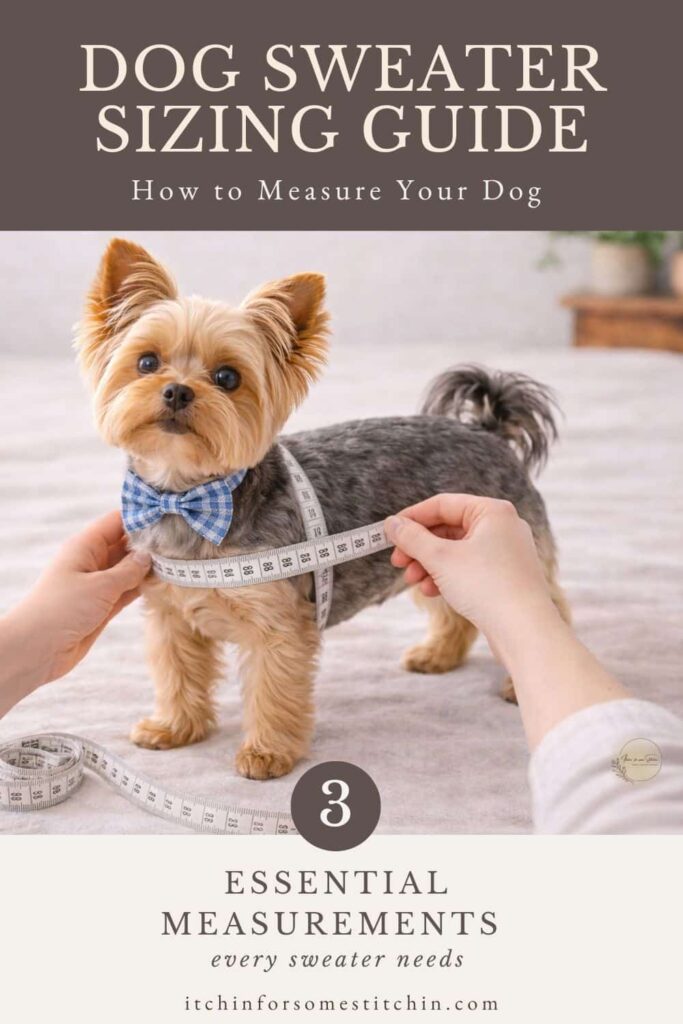
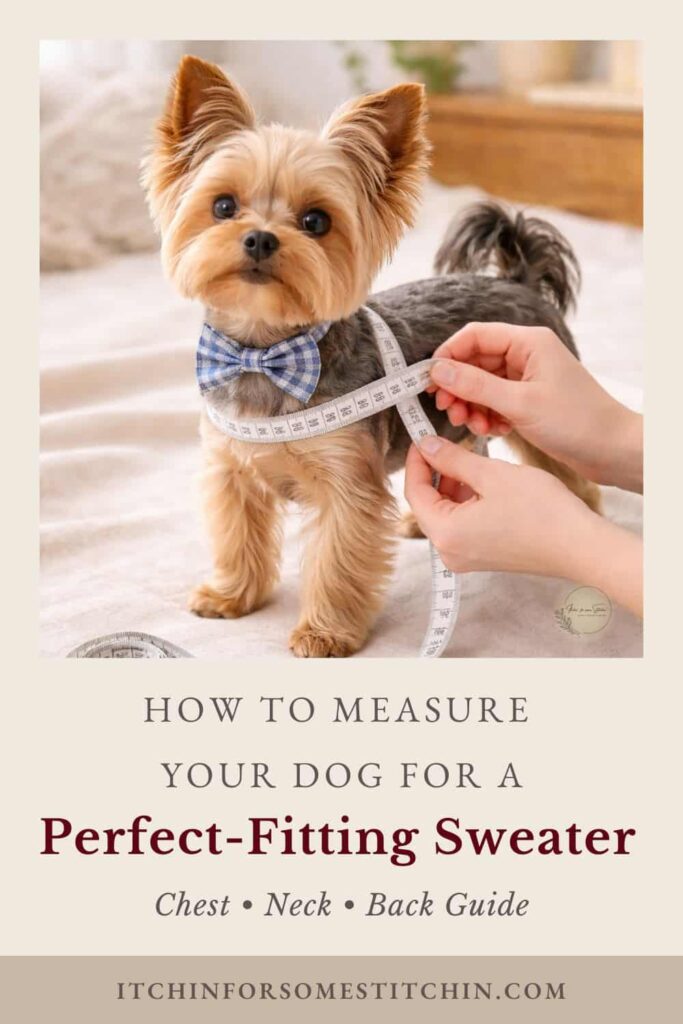
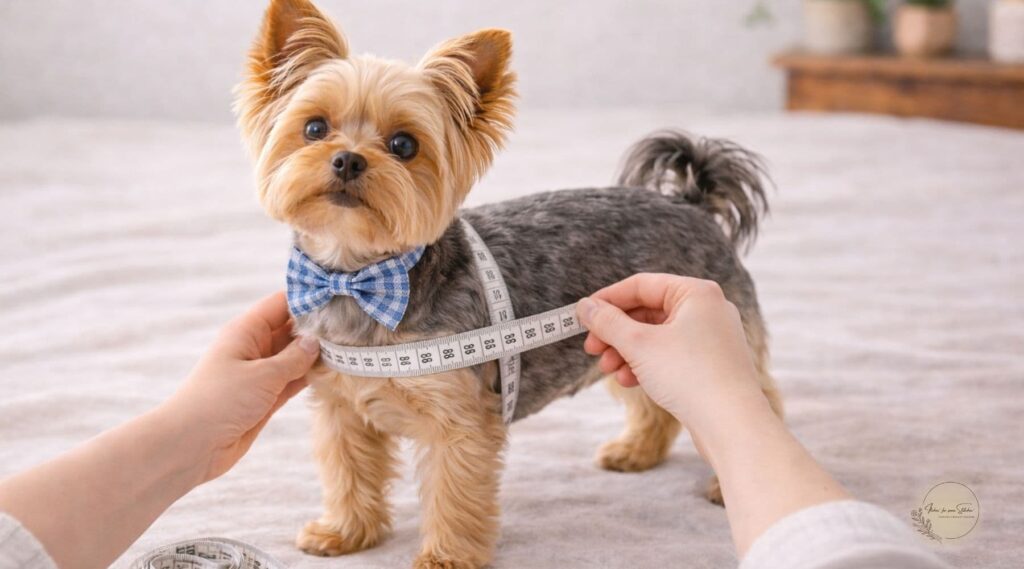
It helps to measure while your dog is standing naturally. A soft measuring tape works best, and the tape should rest gently against the fur without pulling tight.
Let’s take a look at each measurement.
Neck Girth
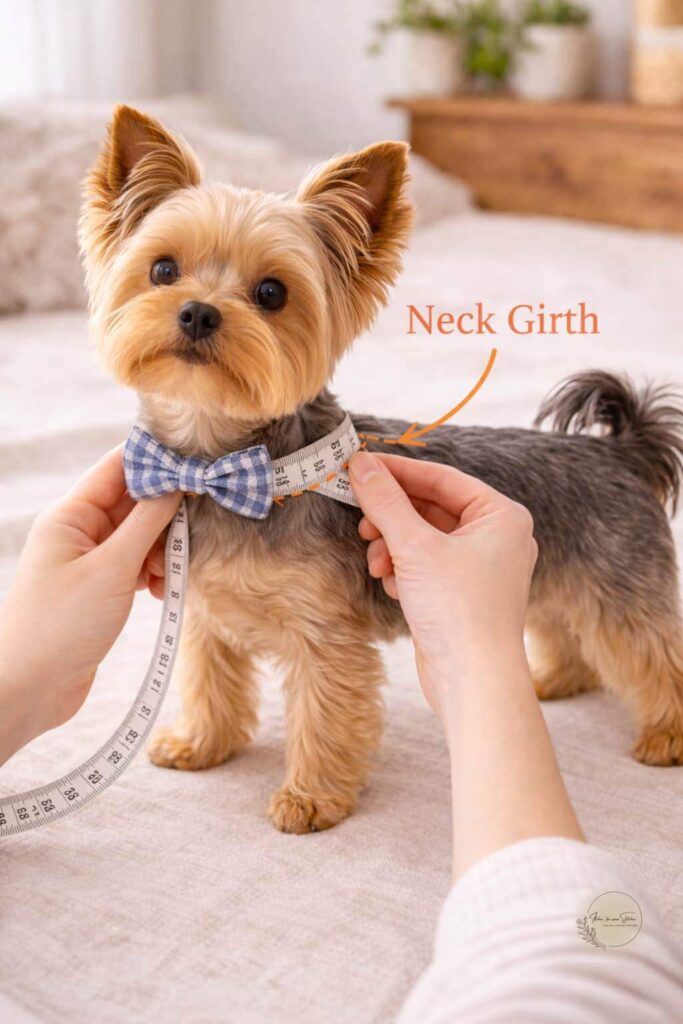
Neck girth is measured around the base of your dog’s neck, where the neck meets the shoulders.
This is usually a little lower than where a collar sits. If you imagine where a sweater collar would naturally rest, that is the spot you want to measure.
Wrap the measuring tape all the way around the neck and keep it level. It should feel snug, but comfortable. Being able to slip one finger between the tape and your dog’s fur is a good rule of thumb.
This measurement helps the sweater slide on easily while still sitting neatly at the neckline.
Chest Girth
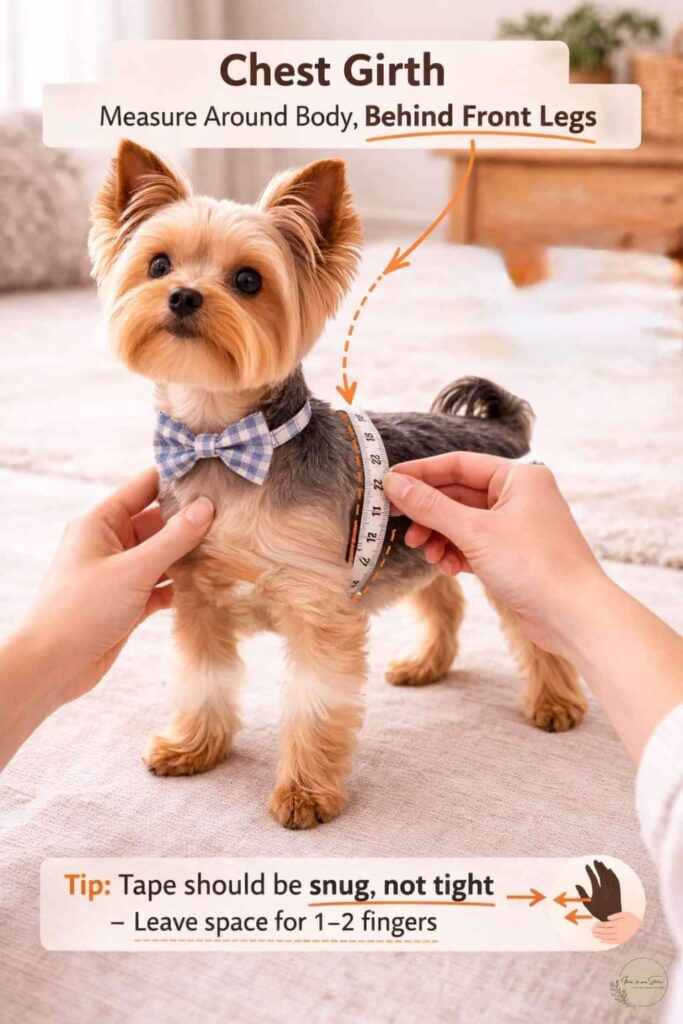
Chest girth is often the most important measurement when planning a dog sweater.
To find it, measure around the widest part of your dog’s chest, just behind the front legs. Keep the tape level and allow it to rest comfortably against the body.
Because this area expands and moves as dogs walk and run, a sweater needs enough room here to feel comfortable. Taking a moment to measure carefully helps prevent sweaters that feel too snug or restrictive later.
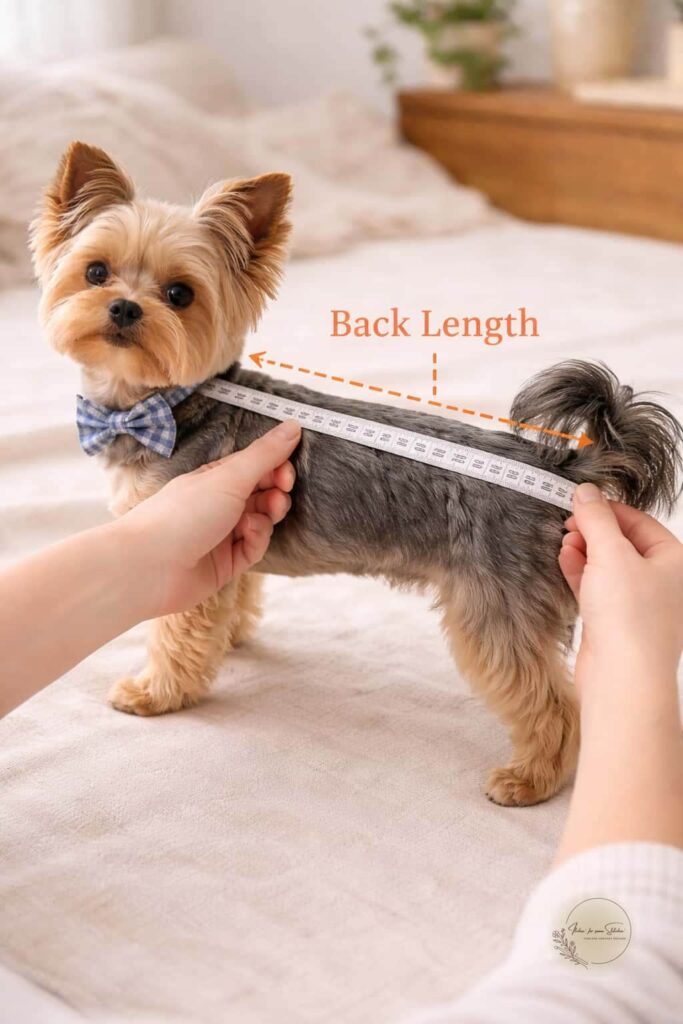
Back Length
Back length is measured along your dog’s spine.
Start at the base of the neck where the shoulders begin, then run the tape gently along the back to the base of the tail. The measurement stops where the tail begins, rather than extending into the tail itself.
This number simply tells you how far the sweater should extend along the back. Some designs stop a little shorter for easy movement, while others reach closer to the tail for extra warmth.
How Tight Should the Tape Be?
A common question when learning how to measure your dog is how snug the measuring tape should feel.
The measuring tape should rest comfortably against your dog’s fur without pulling tightly. In general, it should feel snug, but not tight enough to compress the fur. A helpful guideline is that you should be able to slide one or two fingers between the tape and your dog’s body.
Coat type can also make a small difference when measuring. Dogs with thick or fluffy coats often benefit from a little extra ease, since their fur will compress slightly once a sweater is worn. Short-haired dogs usually need less adjustment, because the tape already rests close to the body.
If the tape is pulled too tight, the finished sweater may feel restrictive, especially around the chest where dogs need the most freedom of movement. If the tape is too loose, the sweater may slide or shift as your dog walks.
You’re simply aiming for a natural measurement — the shape your dog holds when standing comfortably. Once you understand that balance, measuring becomes surprisingly easy.
Love Pinterest? I do!
Save this post for Later and follow all my boards.
Why Weight Alone Is Not Reliable
It’s very common to see dog sweaters labeled by weight — for example, “fits a 10-lb dog.” While that can offer a rough starting point, weight alone rarely tells the full story.
Dogs that weigh the same can have very different proportions. One 10-pound dog might have a narrow chest and longer back, while another might be more compact with a broader chest and thicker neck. Even within the same breed, those differences can be surprisingly noticeable.
This is why measurements make such a difference.
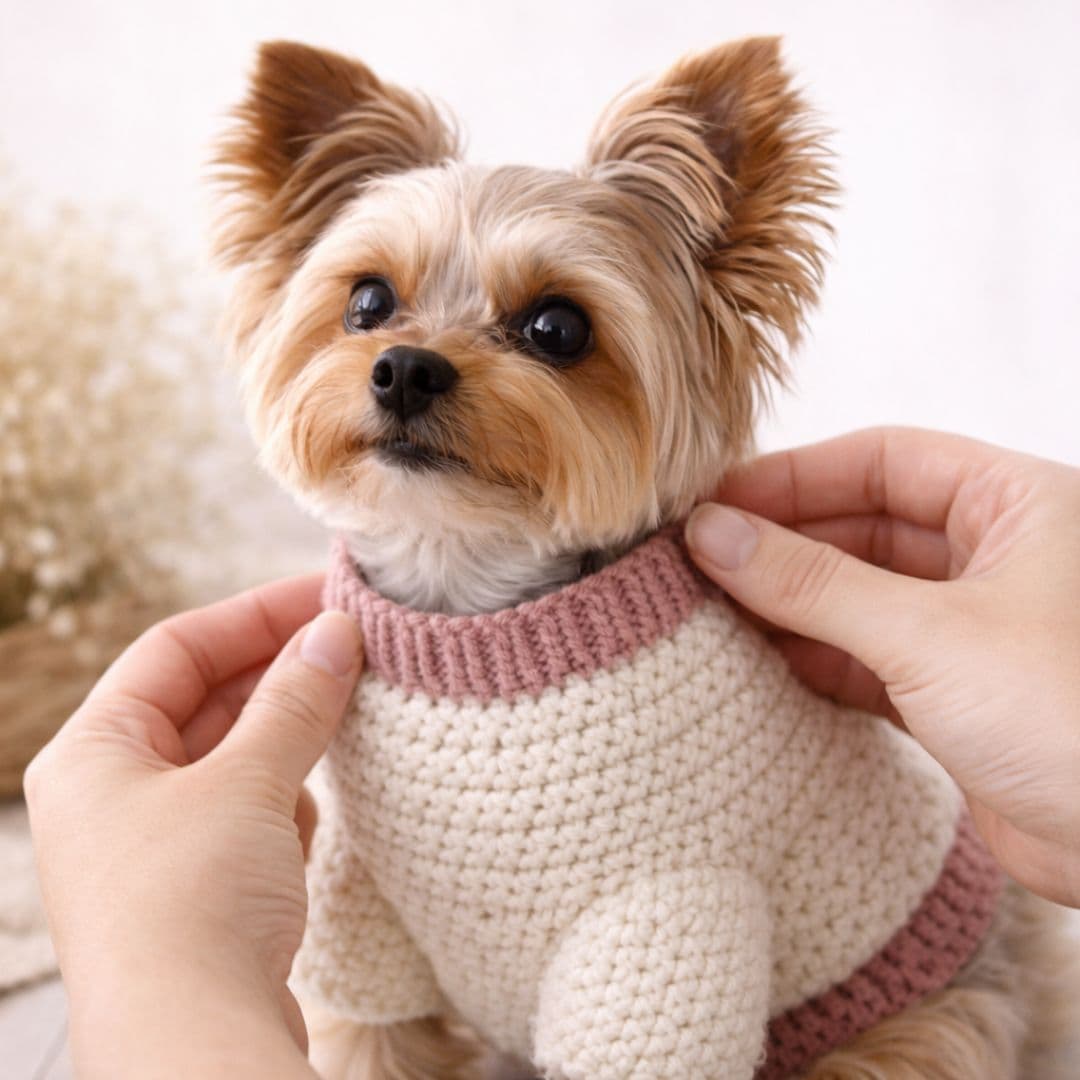
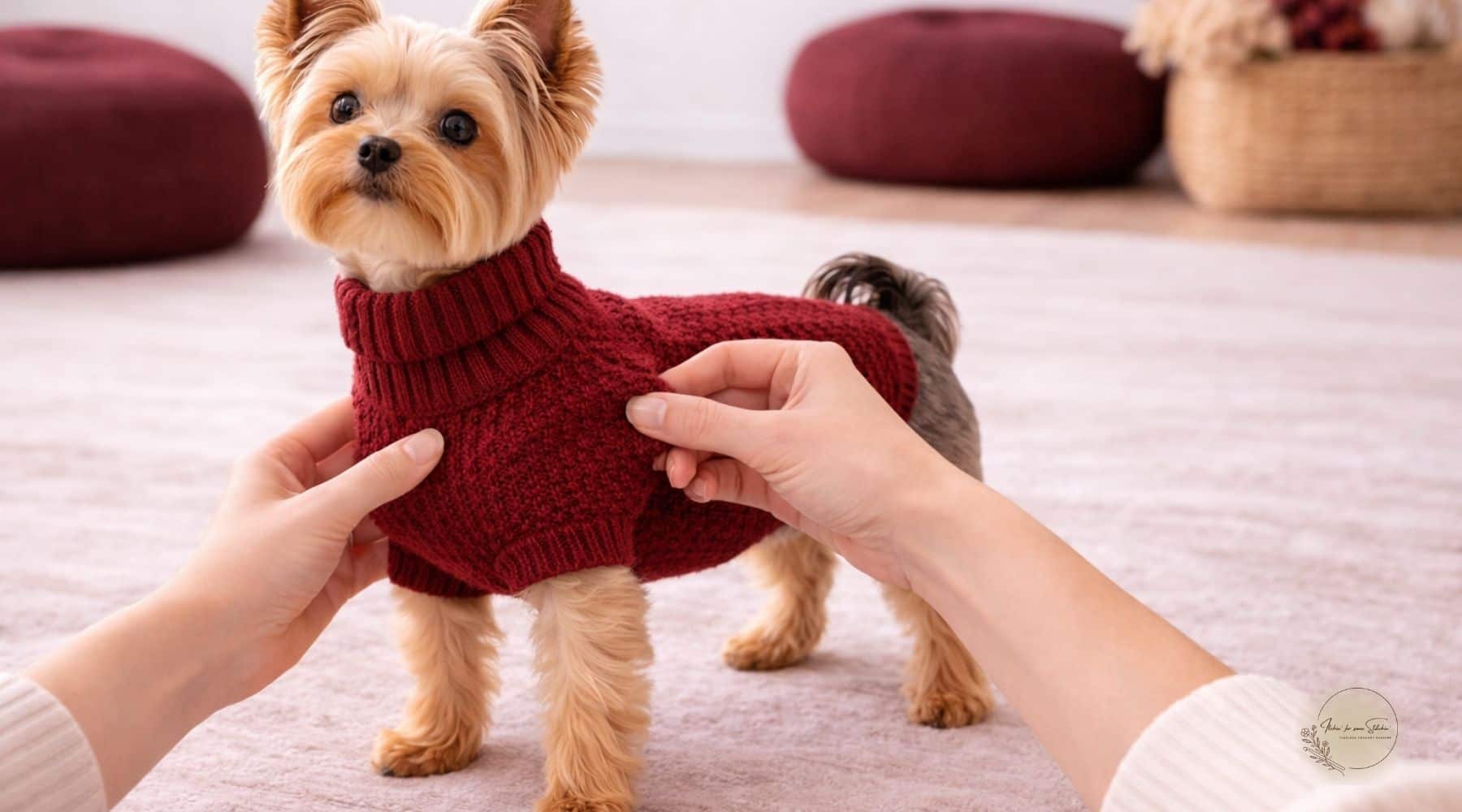
For example, my Quick & Easy Small Dog Sweater was originally designed for my Yorkshire Terriers, who each weighed around 10 pounds. Their neck girth measured about 12 inches, the finished sweater back measures approximately 9½ inches from neck to tail, and the chest section measures about 6 inches from the neckline down toward the belly.
Those proportions worked beautifully for them.
But another dog that also weighs 10 pounds might have a longer back, a narrower chest, or a smaller neck. If you relied only on weight, the sweater could easily end up feeling too tight in one area or too loose in another.
Taking a few simple measurements allows you to see the actual shape you’re working with. Once you have those numbers, choosing a size — or making a small adjustment — becomes much easier.
Weight can be a helpful reference point, but measurements are what truly guide the fit.
When you begin to see how these measurements relate to each other, the structure of a dog sweater becomes much easier to understand.
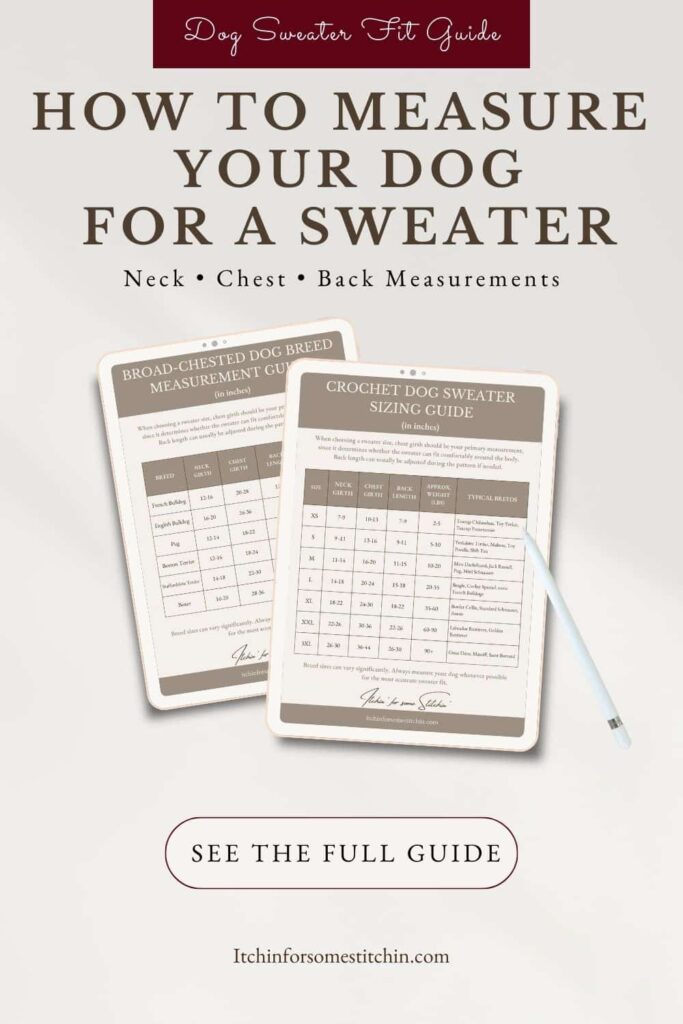
Dog Sweater Measurement Chart
Once you’ve taken your dog’s measurements, it can be helpful to write them down in one place. Keeping a simple record makes it much easier to compare pattern sizing later or adjust a design if needed.
A small chart like the one below works well for most crochet projects.
Many crocheters also find it useful to add notes about things like coat thickness, preferred sweater length, or how much ease their dog seems to need. Over time, this little record becomes a helpful reference whenever you’re choosing or adjusting a dog sweater pattern.
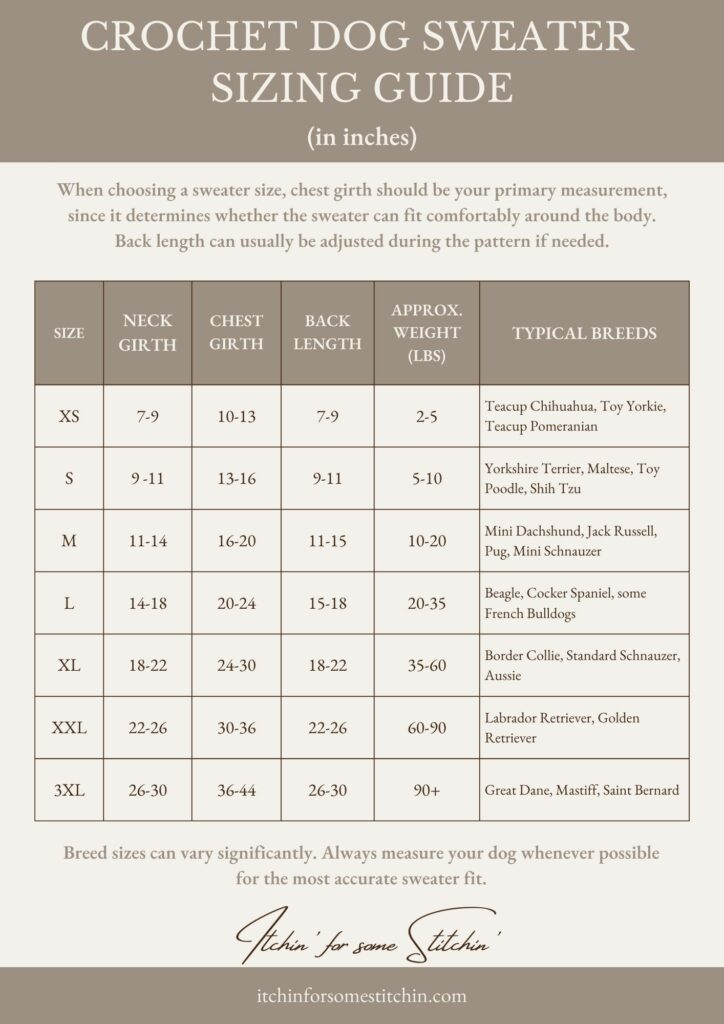
Every dog is built differently, even within the same breed. Always measure your dog’s neck, chest, and back length when possible. This chart is only meant as a starting point when measurements aren’t available.
Want to keep this chart handy?
You can download the printable Dog Sweater Sizing Guide PDF inside the Free Fiber Stash Library, along with other crochet reference tools and guides.
Then add:
Get access to the Fiber Stash here →
Dogs With Broad Chests
Some dog breeds have much deeper or wider chests than the typical measurements shown in the size chart above. These dogs often need a larger chest size but a shorter back length than standard sizing suggests.
Common broad-chested breeds include:
- French Bulldogs
- English Bulldogs
- Pugs
- Boston Terriers
- Staffordshire Terriers
- Boxers
For these breeds, always prioritize the chest girth measurement first, then adjust the back length if needed. A sweater that fits the chest comfortably will usually provide the best overall fit.
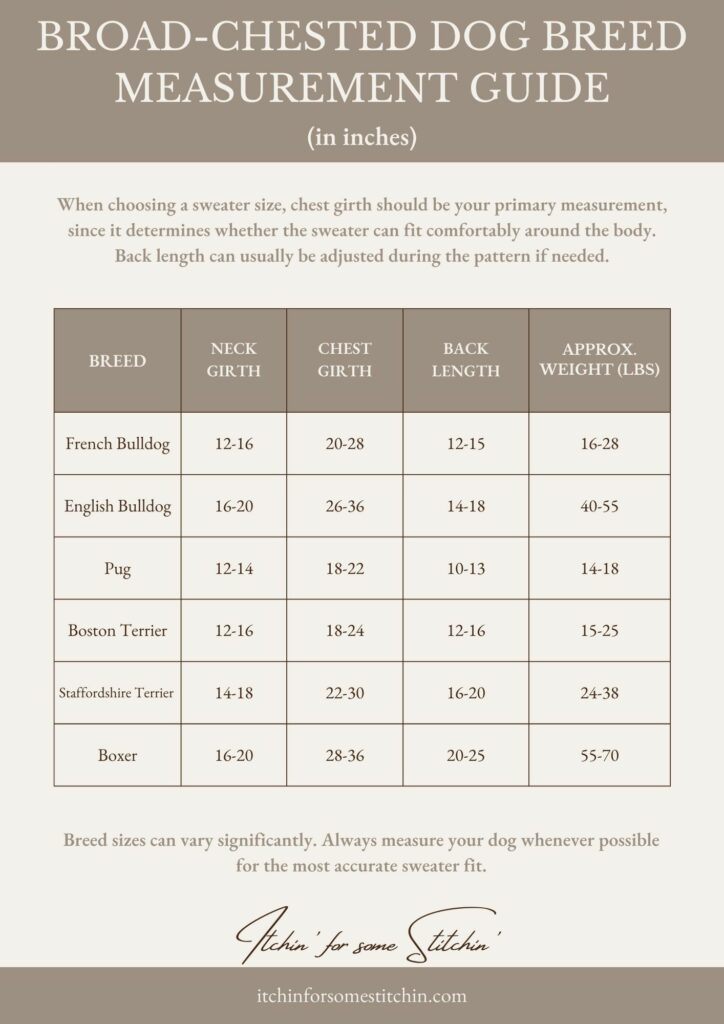
Want to keep this chart handy?
You can download the printable Dog Sweater Sizing Guide PDF inside the Free Fiber Stash Library, along with other crochet reference tools and guides.
Get access to the Fiber Stash here →
If your dog falls between sizes, choose the size that fits the chest girth and adjust the back length during the pattern if necessary.
These measurements are only general breed averages. Individual dogs can vary significantly depending on age, weight, and build. Whenever possible, measure your own dog to ensure the best sweater fit.
What if You Can't Measure the Dog?
If you don't have the dog available to measure -- for example if you're crocheting a gift or planning ahead -- you can estimate the dog's size using its breed.
The American Kennel Club provides a complete list of dog breeds and their typical sizes, which can help you determine whether the dog is small, medium, or large before choosing a sweater size.
Plan the Fit Before You Crochet
Crocheting a dog sweater is much easier when you plan the fit before you start stitching.
Instead of guessing your dog’s size or hoping the sweater works out, this printable Small Dog Sweater Fit Planner helps you measure accurately and choose the right fit from the beginning.
This simple worksheet walks you through the key steps that determine whether a sweater fits beautifully or ends up sitting in the yarn basket.
With just a few measurements and a few minutes of planning, you can confidently choose a pattern and start crocheting knowing the sweater will actually fit your dog.
Inside the Fit Planner
When you download the planner, you’ll get printable worksheets to help you:
• Measure your dog correctly
• Record the three key sweater measurements
• Choose your preferred fit style (snug, classic, or relaxed)
• Calculate your target chest measurement
• Evaluate whether a pattern will work for your dog before you start crocheting
• Plan adjustments like added length or ease
Instead of figuring these things out halfway through a project, you’ll have a clear plan before you even pick up your hook.
Perfect For
This planner is especially helpful if you:
• Crochet sweaters for small dogs
• Struggle with getting sweaters to fit correctly
• Want to adjust patterns for your own dog
• Prefer to plan projects before starting
It pairs perfectly with the Quick & Easy Small Dog Sweater pattern and other flat-constructed dog sweater designs.
Common Dog Measuring Mistakes (And How to Avoid Them)
Measuring your dog is a simple process, but a few small details can sometimes lead to confusing results. If a sweater ever ends up feeling too tight, too loose, or slightly off in proportion, it’s often because one of these small measuring habits slipped in along the way.
Fortunately, they’re all easy to correct once you know what to look for.
- Measuring from the collar instead of the base of the neck
Many people naturally start measuring from where their dog’s collar sits. However, collars often rest higher on the neck than a sweater would. For more accurate sweater sizing, measurements should begin at the base of the neck where the shoulders start, which is where the sweater collar will typically sit.
- Measuring too loosely
If the measuring tape hangs loosely or drifts away from the body, the final numbers can be larger than your dog’s actual shape. The tape should rest snugly against the body without compressing the fur, following the natural outline of your dog.
- Not measuring while your dog is standing
Measurements taken while a dog is sitting or lying down can change the way the body is positioned. For the most reliable results, it helps to measure while your dog is standing comfortably on all four legs, with their body in a natural posture.
- Forgetting about coat thickness
Dogs with thick or fluffy coats may appear larger than they are because of their fur. Remember that fur compresses slightly once a sweater is worn, so measurements should reflect the body beneath the coat rather than the full fluff.
- Not accounting for stretch
Crochet fabric naturally has a little flexibility, especially in stitches like double crochet or ribbing. Because of this, sweaters often need just a bit of ease, rather than being measured exactly skin-tight. Understanding that gentle stretch helps the sweater move comfortably with your dog.
- Measuring at the wrong part of the chest
Chest girth should always be measured around the widest part of the ribcage just behind the front legs. Measuring too far forward near the shoulders or too far back along the ribs can change the number enough to affect fit.
When these small details are in place, measuring becomes much more consistent. And once you have reliable measurements, choosing a size or adjusting a crochet dog sweater becomes far more predictable.
What to Do With These Measurements
Once you have your dog’s neck girth, chest girth, and back length written down, choosing a sweater pattern becomes much easier. Instead of guessing based on weight alone, you can compare your measurements directly to the finished dimensions of a pattern and decide which size or adjustment will work best.
If you’re just getting started, a simple design is often the easiest place to begin.
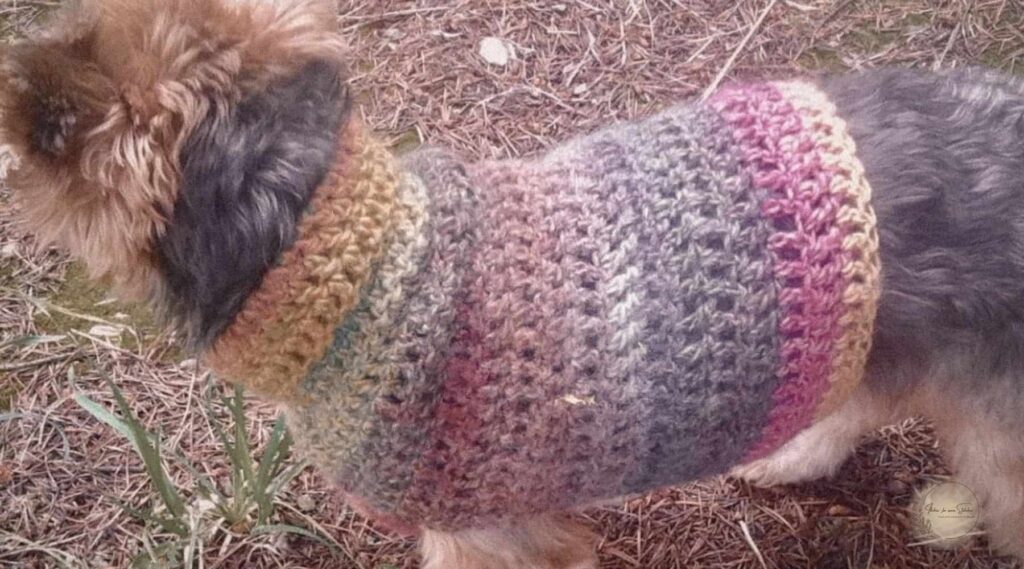
Quick & Easy Small Dog Sweater
This beginner-friendly sweater was designed for small dogs like Yorkshire Terriers and similar breeds. The construction is straightforward, which makes it a great first project if you’re learning how dog sweater shaping works.
Once you’re comfortable with the basic fit, you might enjoy trying a few variations.
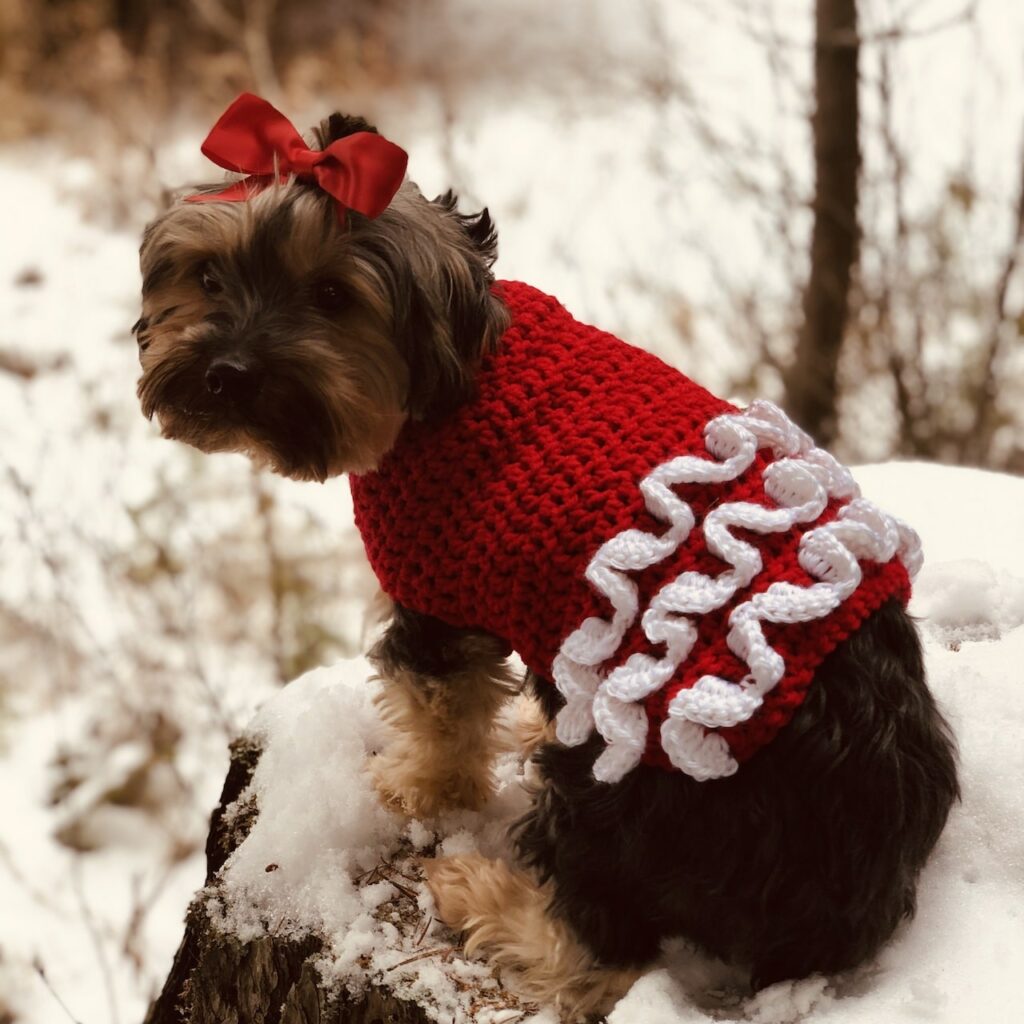
Ruffled Small Dog Sweater
This design uses a similar foundation but adds a decorative ruffle detail for a slightly more playful look.
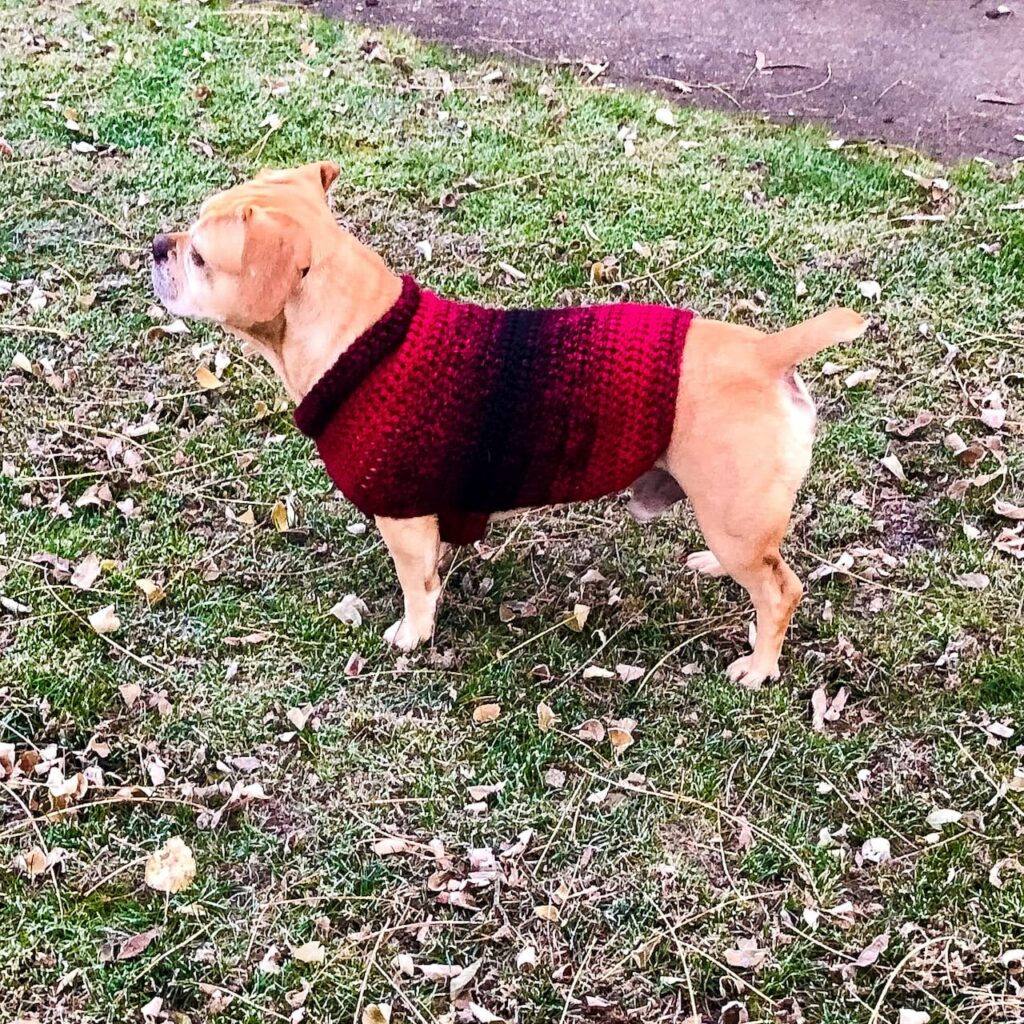
Medium Dog Sweater
This design uses a similar foundation but adds a decorative ruffle detail for a slightly more playful look.
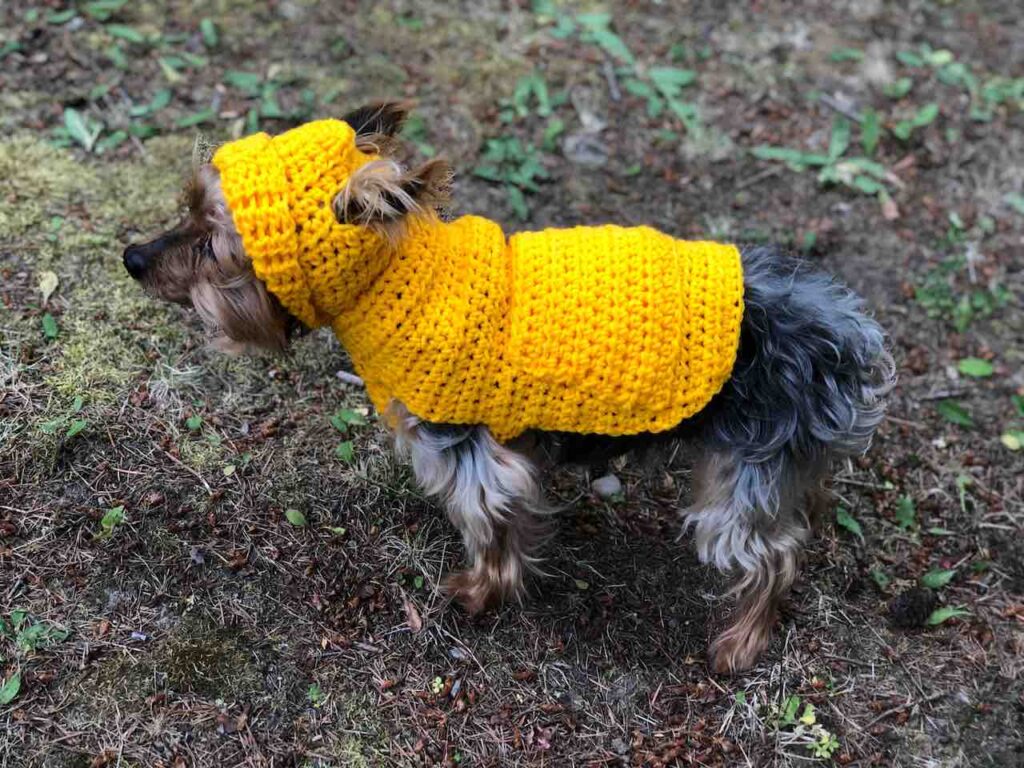
Hooded Dog Sweater
For colder weather, this design adds a hood while keeping the same comfortable sweater structure.
With your measurements in hand, you now understand how to measure your dog for a crochet sweater, which makes choosing or adjusting a pattern much easier.
How to Adjust Your Dog Sweater for the Perfect Fit
Now that you have your dog’s measurements — and you’ve seen how different sweater styles can look —the next step is making sure your project fits exactly the way you want.
Even with the right measurements, small adjustments are often needed depending on the pattern and your dog’s unique shape.
- If your sweater feels too tight or too loose around the chest, you’ll need to adjust the width so it sits comfortably without pulling or sagging. Learn how to adjust crochet dog sweater chest width.
- If your sweater needs to be shorter or longer, adjusting the back length will help you get the right coverage without restricting movement. Follow this guide to adjust the back length of a crochet dog sweater.
- And if the neckline feels too tight, too loose, slips backward, or doesn’t sit comfortably around your dog’s neck, small neckline adjustments can make a huge difference in the overall fit. Learn how to adjust neck openings in crochet dog sweaters.
Taking a few extra minutes to adjust your pattern using these measurements can make the difference between a sweater that almost fits — and one that fits just right.
Looking Deeper Into Dog Sweater Fit
Once you begin working with these measurements, you may notice that small adjustments can make a big difference in how a sweater fits. Slight changes to back length, chest shaping, or neckline width can help a design sit more comfortably on your dog’s body.
Over time, understanding how these measurements relate to the structure of a sweater opens the door to making thoughtful adjustments rather than simply following a pattern exactly as written.
When you understand the structure, the stitches begin to feel less mysterious.
Frequently Asked Questions – Dog Sweater Measurement FAQs
Have questions while learning how to measure you dog for a crochet sweater? These FAQs cover the most common concerns and tips for success.

Thank you
I sincerely appreciate you visiting my website! By sharing my content and/or making a purchase you are making it possible for me to continue producing and sharing free content for everyone to enjoy. Your support is amazing!