Crochet Beginner’s Tools: What You Actually Need (and What You Don’t)
Disclosure: This post may contain affiliate links. If you make a purchase through these links, I may earn a small commission at no additional cost to you.
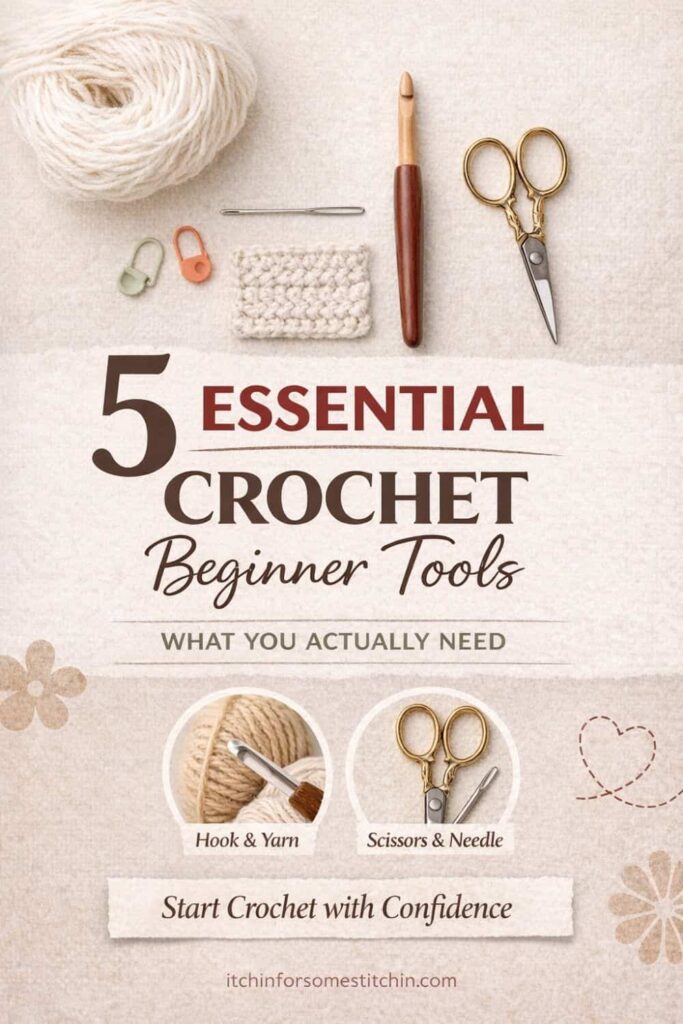
Starting crochet doesn’t require a long list of supplies — just a few simple crochet beginner tools and a clear place to begin.
If you’ve been wondering what do you need to start crochet, you’re not alone.
Most beginners assume they need a full kit, multiple hooks, and a pile of yarn before they can even begin. That assumption often leads to overwhelm before the first stitch is ever made.
The truth is much simpler.
You only need a handful of crochet beginner tools to get started—tools that work together, feel manageable in your hands, and allow you to focus on learning the structure of crochet instead of juggling too many variables at once.
In this guide, we’ll walk through the essential crochet beginner tools, how to choose them, and just as importantly — what you can skip for now.
Because when you start with clarity, everything else becomes easier.
If you’re completely new and want to see how all of these crochet beginner tools fit together, you can start here: How to Crochet for Beginners.
Love Pinterest? I do!
Save this post for Later and follow all my boards.
The 5 Essential Crochet Beginner Tools
When people search for crochet supplies for beginners, they’re often shown long lists of tools.
But most of those lists include things you don’t actually need yet.
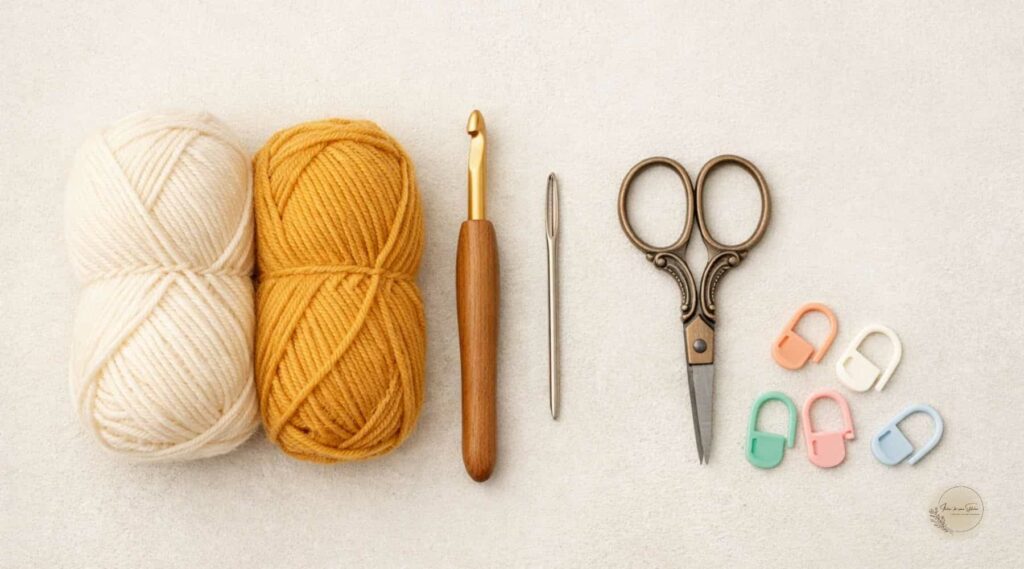
These are the only basic crochet tools you need to begin:
- A crochet hook
- Yarn
- Scissors
- A yarn needle
- Stitch markers
That’s it.
Everything else can come later — when you understand what you’re making and why.
1. Crochet Hook (Your Primary Tool)
If crochet had a “main character,” it would be the hook.
Out of all your crochet beginner tools, this is the one you’ll use constantly. It’s the tool that forms every stitch, controls your tension, and connects your hands to the yarn.
What Size Should Beginners Use?
Start with:
- H/8 (5.0 mm)
- I/9 (5.5 mm)
- J/10 (6.0mm)
These sizes pair well with beginner-friendly yarn and create stitches that are large enough to see, but not so large that they become difficult to control.
What Material Is Best?
- Aluminum hooks → smooth, consistent, and affordable
- Ergonomic hooks → easier on your hands during longer sessions
If your hands tire quickly, an ergonomic handle can make a noticeable difference.
What Actually Matters
The most important thing is not the brand or style — it’s how the hook feels in your hand.
If you’re unsure which hook size or style is right for you, this guide will walk you through exactly what to look for: How to Pick Your First Crochet Hook.
Once you begin to understand how your hook moves through the yarn, the stitches start to feel less mysterious.
2. Yarn (The Material You Build With)
Yarn is often the most confusing part of choosing beginner crochet supplies.
There are different fibers, weights, textures, and labels—and without guidance, it can feel like you’re guessing.
Let’s simplify it.
The Best Yarn for Beginners
Start with:
- Worsted weight yarn (Category 4)
- Acrylic or acrylic blends
- Light or medium colors
These choices give you:
- Clear stitch definition
- Easy handling
- Predictable results
What to Avoid (For Now)
Avoid:
- Fuzzy or textured yarn
- Very dark colors
- Super thin yarn
- Extremely bulky yarn
These make it harder to see your stitches and control your tension—which can make learning feel more frustrating than it needs to be.
Why Yarn Choice Matters
Yarn is one of the most important crochet essentials for beginners because it directly affects how clearly you can see and understand your stitches.
If you want a deeper understanding of how yarn works—including weights, fibers, and how to choose the right one — this guide will walk you through it: Guide to Yarn – Weight, Fibers, and How to Choose It.
3. Scissors (Simple, but Essential)
Scissors may seem like the least important of your crochet beginner tools, but they’re used in every single project.
What to Look For
- Sharp enough to cut yarn cleanly
- Small enough to keep nearby
- Comfortable to hold
You don’t need specialty scissors. You just need a pair that works reliably.
This is one of those tools where simplicity is exactly what you want.
4. Yarn Needle (For Finishing Your Work)
The yarn needle is one of the most overlooked crochet tools list for beginners—until you finish your first project and realize you have loose ends everywhere.
This tool is what allows you to finish your work cleanly.
What It’s Used For
- Weaving in yarn ends
- Sewing pieces together
- Tidying up your project
What to Look For
- A large eye for easy threading
- A blunt tip that won’t split your yarn
Why It Matters
Finishing is part of the structure of crochet.
And when you learn to finish your work properly from the beginning, your projects immediately look more polished.
5. Stitch Markers (Your Quiet Helpers)
Stitch markers are small, but they are one of the most helpful crochet beginner tools you can use.
What They Do
- Mark the beginning of a round
- Help you keep track of stitches
- Prevent counting mistakes
Why Beginners Need Them
When you’re new, it’s easy to lose track of where you are.
Stitch markers give you a visual reference point so you don’t have to rely on memory alone.
Beginner Tip
If you don’t have stitch markers yet, you can use:
- A paperclip
- A safety pin
- A scrap piece of yarn
Crochet doesn’t require perfection — it rewards resourcefulness.
Optional Crochet Beginner Tools (Helpful, Not Required)
Once you’re comfortable with your basic crochet beginner tools, you can start adding a few extras.
These beginner crochet supplies are helpful—but not necessary at the beginning.
Measuring Tape
Useful for:
- Checking size
- Keeping projects consistent
Especially helpful for wearables.
Row Counter
Useful for:
- Tracking rows automatically
- Reducing counting mistakes
This becomes more helpful as projects get longer.
Project Bag
Useful for:
- Keeping your tools organized
- Making crochet portable
Not required — but very nice to have.
What You Do NOT Need (And Why)
One of the biggest sources of overwhelm for beginners is thinking they need everything right away.
You don’t.
Many lists of crochet supplies for beginners include tools that are only useful later—once you understand the basics.
Skip These (For Now)
- Large hook sets
- Expensive yarn
- Blocking tools
- Specialty gadgets
Why Simplicity Matters
The fewer tools you start with, the easier it is to focus on learning.
Crochet is not about collecting tools.
It’s about understanding how yarn and structure work together.
How These Crochet Beginner Tools Work Together
Each of your crochet beginner tools has a specific role:
- Your hook forms the stitches
- Your yarn creates the fabric
- Your scissors manage your working yarn
- Your needle finishes your work
- Your stitch markers guide your progress
When these tools work together, they create a system.
And when you understand that system, crochet becomes far less confusing.
A Quiet Shift: From Tools to Understanding
At first, it may feel like you’re learning how to use tools.
But what you’re really learning is how crochet is built.
Each stitch is a loop.
Each row is a structure.
Each project is a series of decisions.
The tools simply help you create that structure.
When you understand the structure, the stitches begin to feel less mysterious.
Putting It All Together
With just a few crochet beginner tools, you can already begin:
- A dishcloth
- A scarf
- A simple square
You don’t need more tools.
You don’t need more supplies.
You just need to start.
Where to Go Next
You might expect your next steps to be complicated — but they don’t need to be.
Start here:
- Learn the basic stitches
- Practice holding your hook and yarn
- Begin your first simple project
These small steps are what build confidence.
Most beginners don’t struggle because crochet is hard—they struggle because they’re trying to piece everything together on their own. Different tutorials, different methods, different explanations… and none of it quite connects.
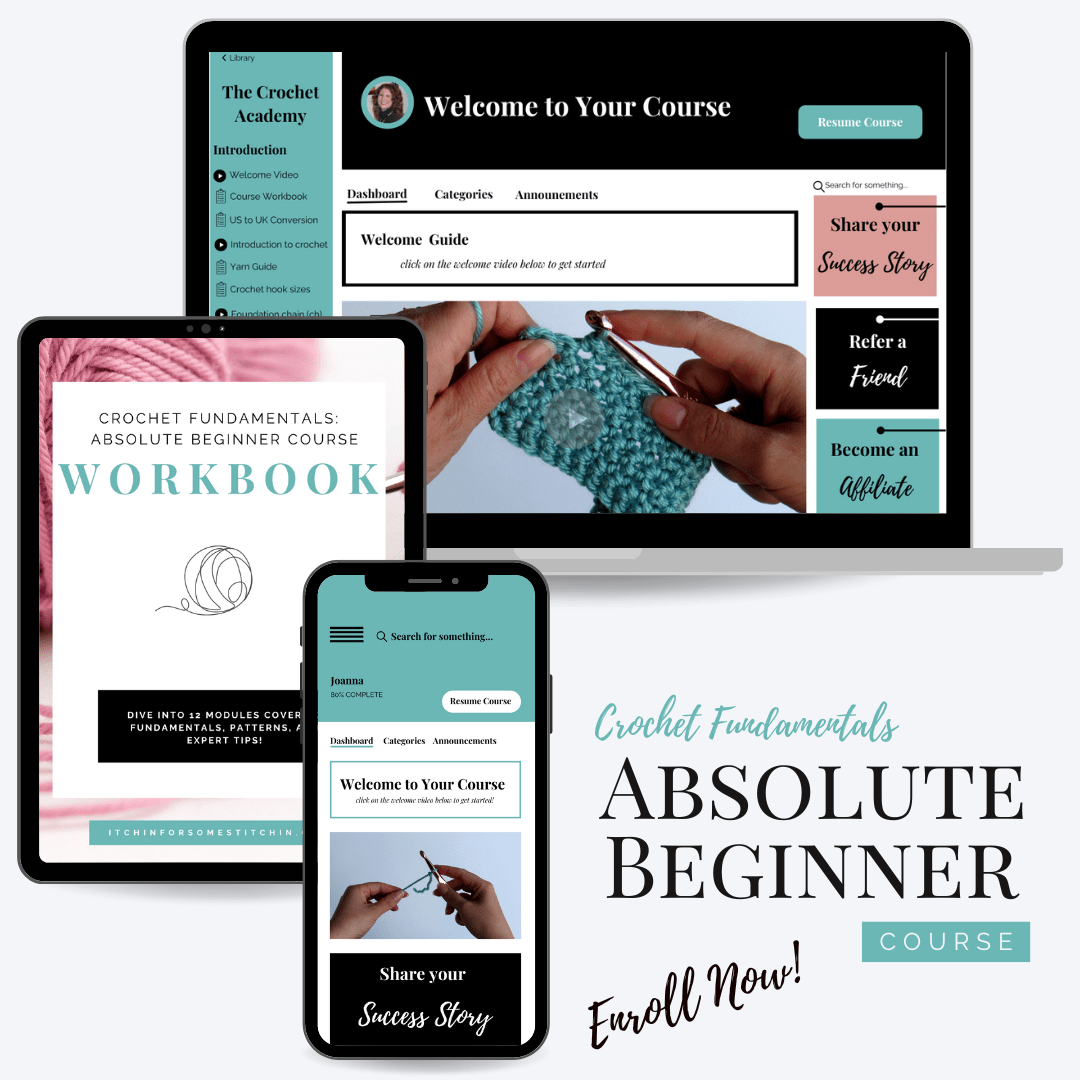
If you’d rather follow a clear, structured path from the very beginning, my Absolute Beginner Crochet Course walks you through everything step by step.
Inside, you’ll learn:
- How to hold your hook and yarn comfortably
- How stitches are formed (so they actually make sense)
- How to build your first project with confidence
- How all of these crochet beginner tools work together in a way that feels natural
It’s designed to take the guesswork out of learning, so you can focus on understanding—not just copying.
And if you find yourself wanting everything in one place — patterns, guidance, and a more organized way to continue learning — the Crochet Conservatory is there when you’re ready.
But no matter where you continue, the foundation remains the same.
The right crochet beginner tools don’t overwhelm you — they support you.
They give you just enough to begin, without adding unnecessary complexity.
Start with the basics.
Let your skills grow.
Add more only when you need it.
That’s how crochet becomes something you understand — not something you struggle through.
Thank you
I sincerely appreciate you visiting my blog! By sharing my content and/or making a purchase you are making it possible for me to continue producing and sharing free content for everyone to enjoy. Your support is amazing!