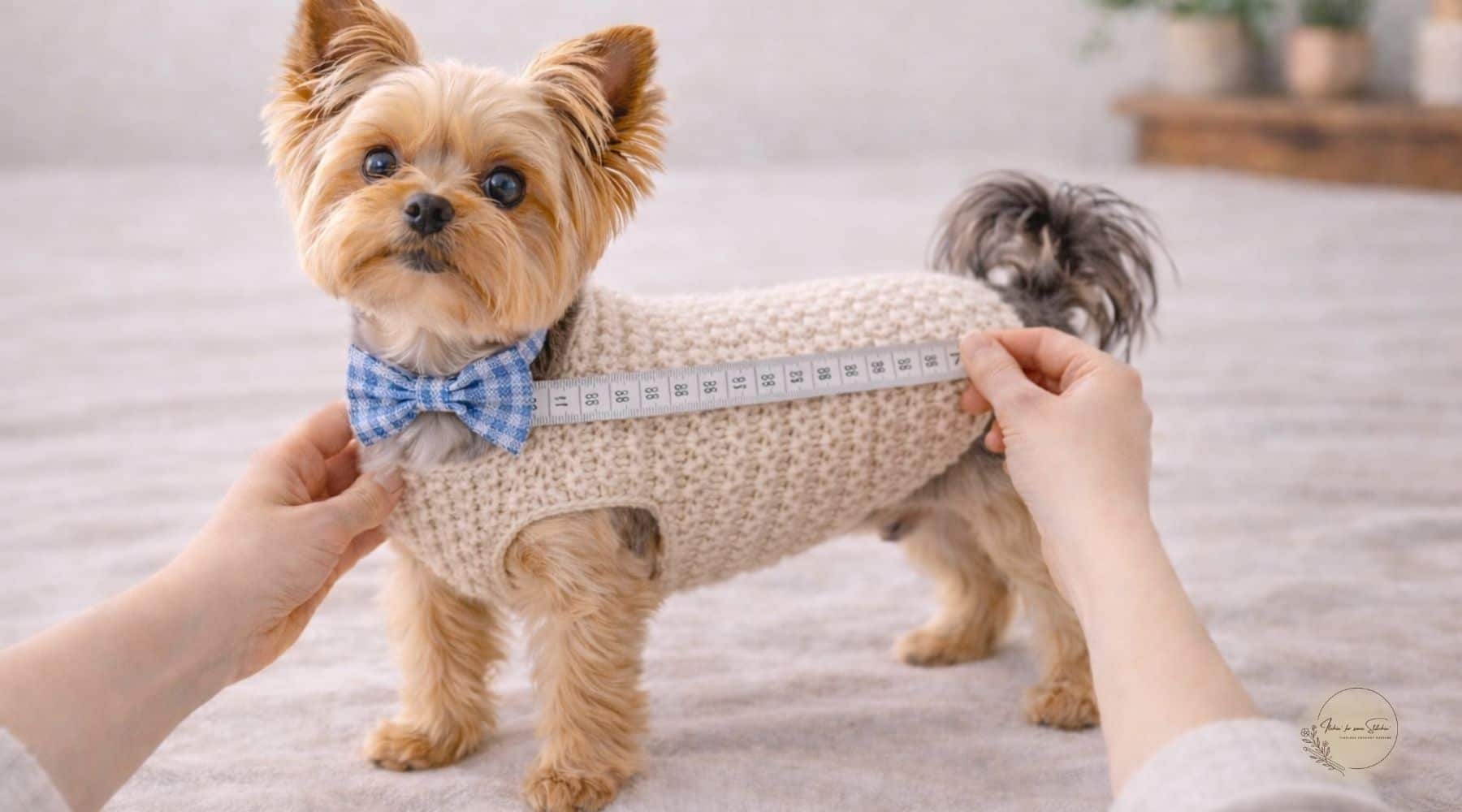
How to Adjust Crochet Dog Sweater Chest Width (Easy Fit Guide)
Disclosure: This post may contain affiliate links. If you make a purchase through these links, I may earn a small commission at no additional cost to you.
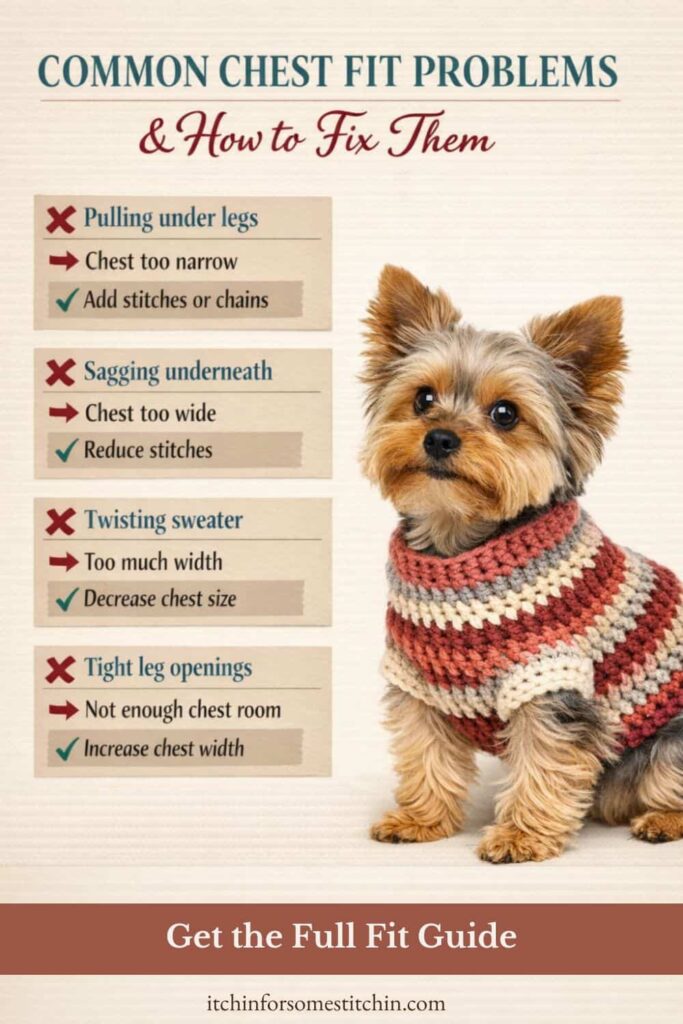
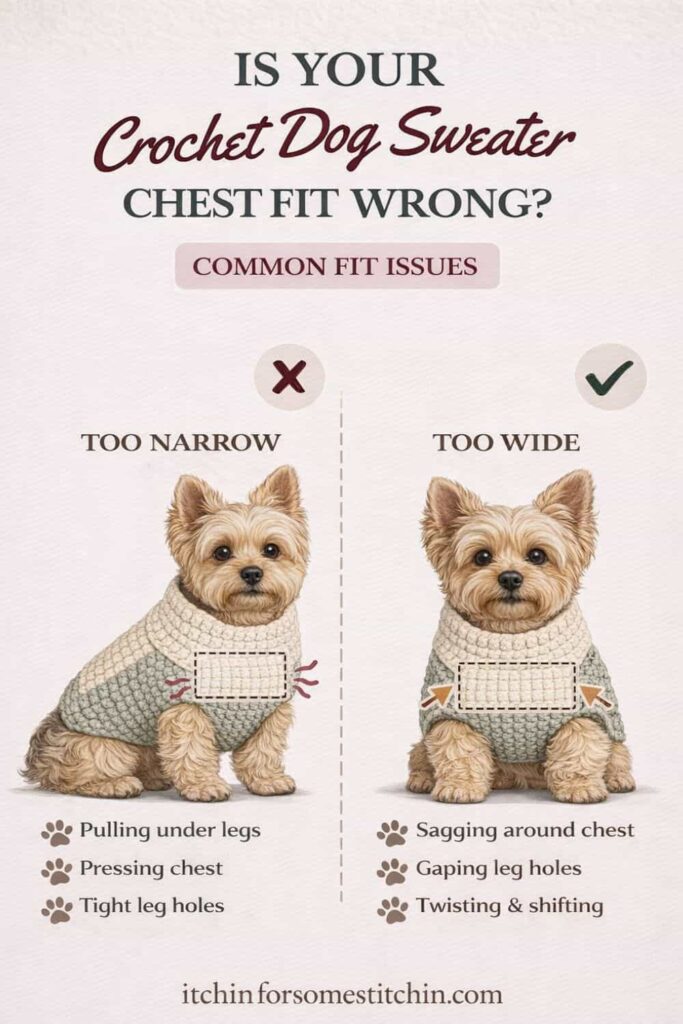
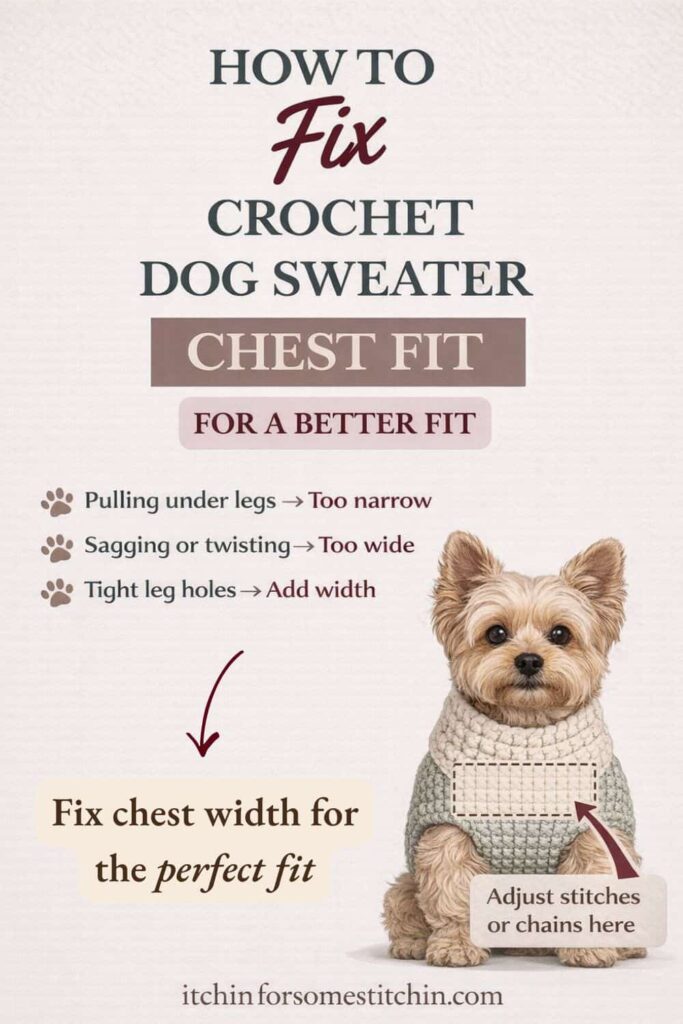
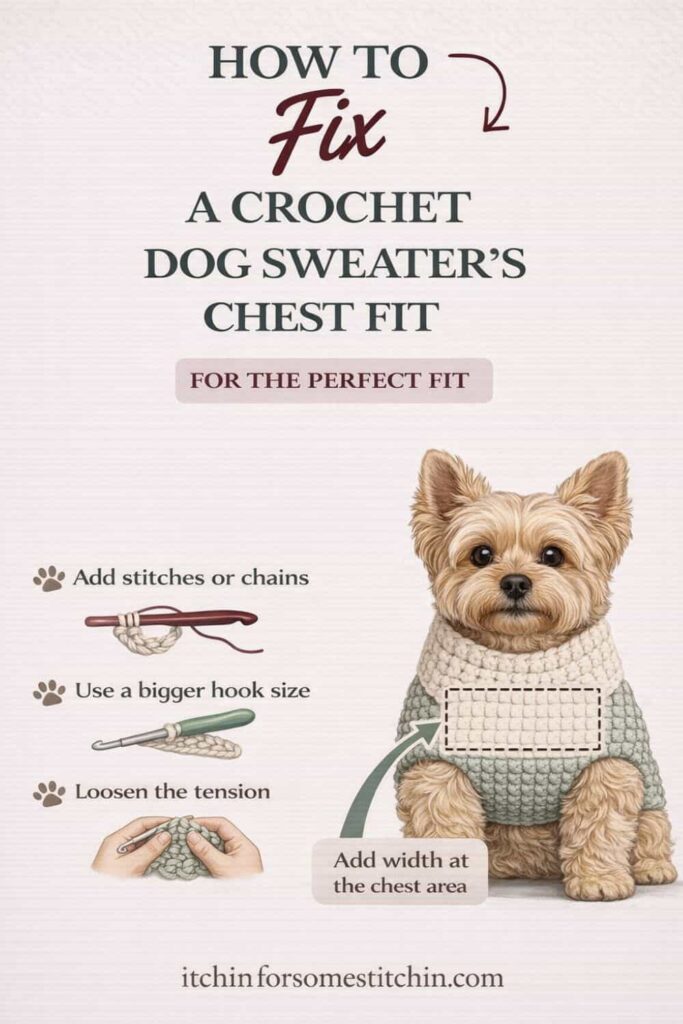
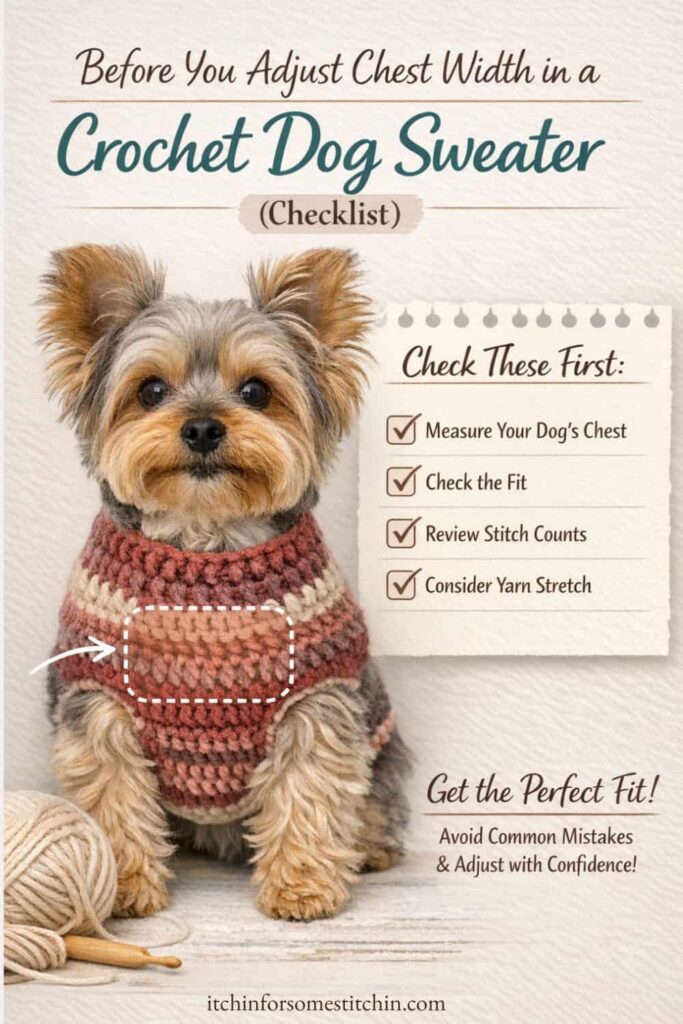
If you’re trying to adjust crochet dog sweater chest width, you’re not alone—this is one of the most common fit issues when making dog sweaters.
A dog sweater that’s too tight across the chest can pull under the legs, restrict movement, and make your dog uncomfortable. On the other hand, a sweater that’s too loose can twist, sag, or simply not stay in place.
The tricky part is that most crochet patterns are written for standard sizing, but dogs aren’t standard at all. Two dogs with the same back length can have completely different chest measurements.
The good news? Chest width is one of the easiest adjustments you can make once you understand how the sweater is constructed.
In this guide, you’ll learn exactly how to adjust the chest width of a crochet dog sweater so it fits your dog comfortably and correctly.
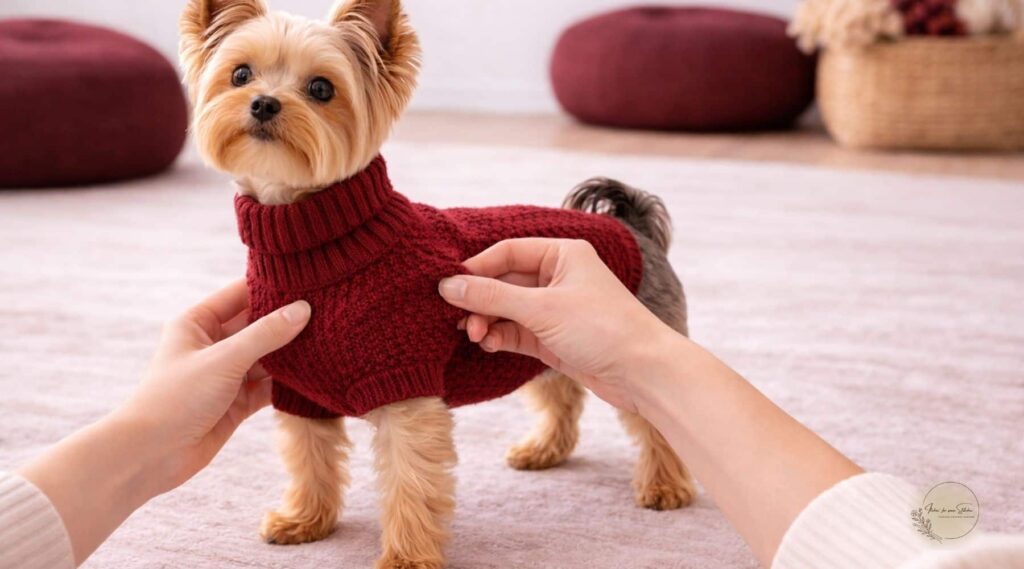
A properly fitted chest section is what allows a dog sweater to sit comfortably across the body without pulling, twisting, or restricting movement.
In many patterns, including my Quick & Easy Small Dog Sweater, the chest section is designed to shape naturally around your dog’s body using simple increases or decreases.
Once you understand how that shaping works, you can easily adjust the width to fit almost any dog.
In this guide, I’ll walk you through:
• how chest width is created in different sweater constructions
• how to adjust chest width in separate chest panel designs
• how to adjust chest width in one-piece sweaters
• simple fixes for the most common chest fit problems
If your sweater is also too short or too long, be sure to check out my guide on adjusting the back length of a dog sweater for a complete fit solution.
Table of Contents
Love Pinterest? I do!
Save this post for Later and follow all my boards.
What Is Chest Width in a Dog Sweater?
Chest width refers to the front section of the sweater that sits between your dog’s front legs and across the chest.
Unlike chest girth, which measures all the way around your dog’s body, chest width is about how wide the sweater panel is across the front.
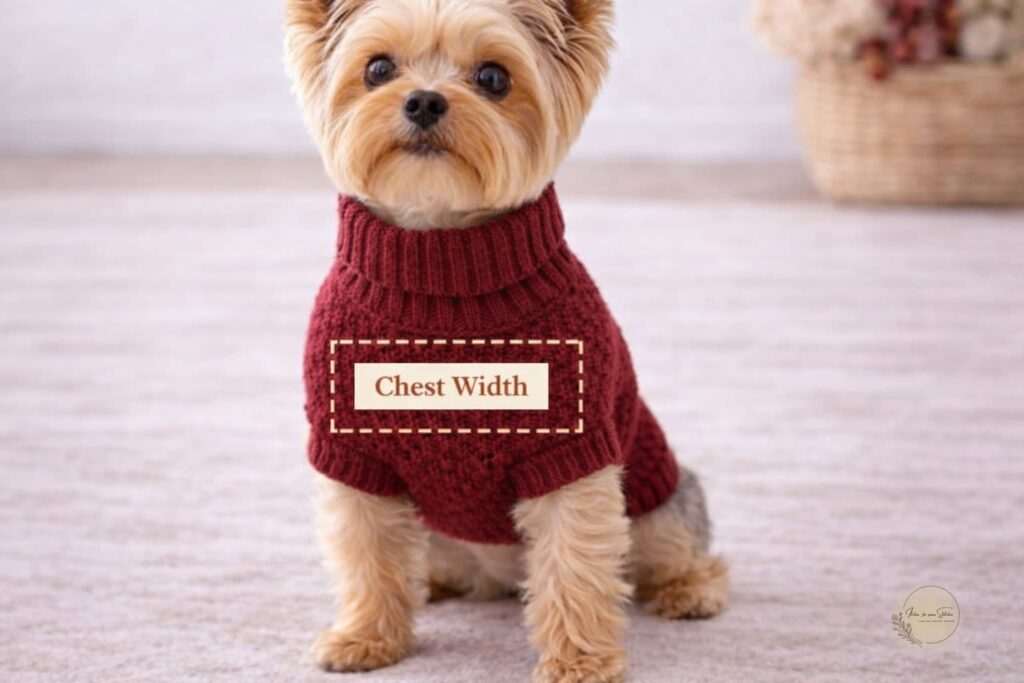
This section controls how the sweater fits in three important ways:
- How snug the sweater feels across the chest
- How much space your dog has between the front legs
- Whether the sweater pulls, gaps, or sits comfortably
If the chest width is too narrow, the sweater can feel tight and restrict movement.
If it’s too wide, the fabric may sag or shift out of place.
In most crochet dog sweater patterns, this area is shaped by:
- the number of stitches used
- and how decreases or increases are worked
For example, the chest panel is often tapered using decreases to create a better fit along the body
Understanding the Chest Section of a Dog Sweater
Most crochet dog sweaters control the chest width in one of two ways:
1. A separate chest piece
2. A continuous body worked in one piece
The adjustment method depends on which construction the pattern uses.
Understanding this structure first makes modifying any pattern much easier.
Signs the Dog Sweater Chest Needs Adjusting
The chest section is what controls how the sweater fits and moves. When it’s right, everything lines up beautifully. When it’s off… the whole sweater starts behaving like it has opinions.
Whether the chest section is worked as a tapered panel or shaped within the body of the sweater, this area controls how the sweater fits under the chest — so even small sizing changes make a big difference.
Let’s break it down.
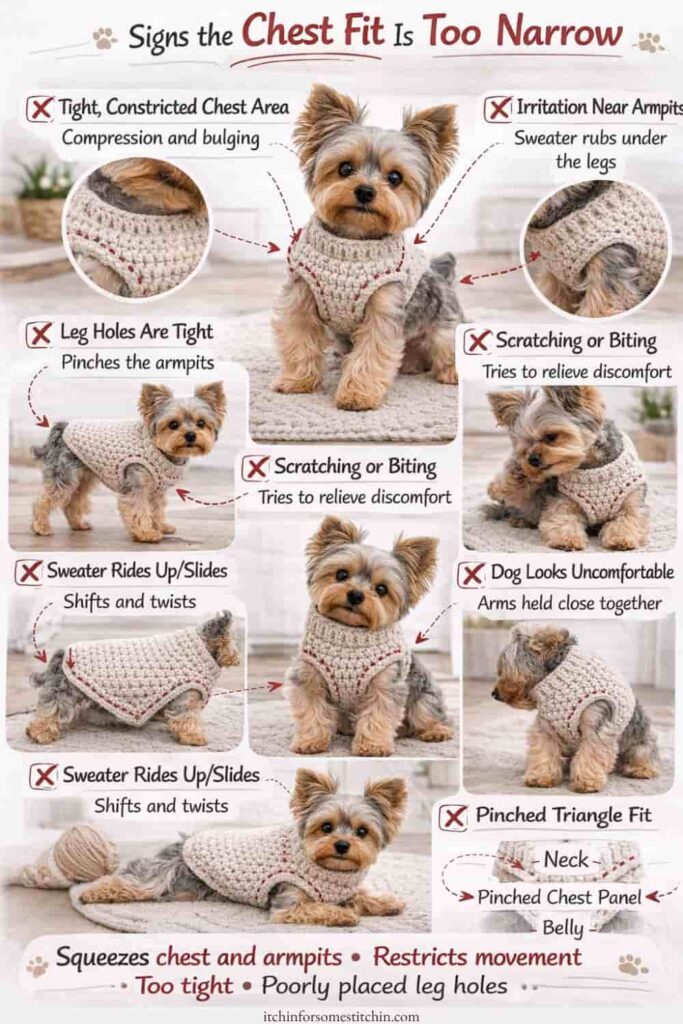
Signs the Chest Piece Is Too Narrow
When the chest panel is too small, it pulls everything inward and upward. Instead of wrapping comfortably, it grips.
You might notice:
- The sweater pulls under the front legs
The fabric cuts into the armpit area instead of sitting smoothly. - The belly panel doesn’t reach the sides of the back piece
You’ll see gaps or exposed fur along the sides. - Leg holes feel tight or restrictive
They may pinch or sit too close together. - The sweater rides up or shifts forward
It can’t anchor properly, so it creeps upward. - The dog seems uncomfortable moving
Short steps, stiffness, or that “please remove this immediately” posture.
In short: too narrow = tension + restriction
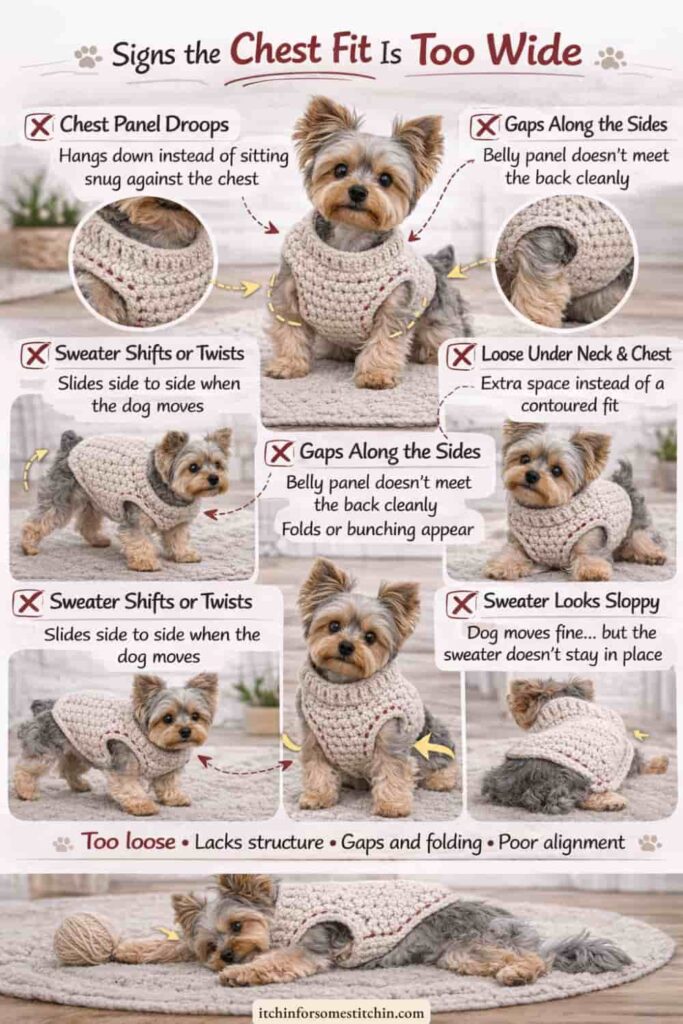
Signs the Chest Piece Is Too Wide
Now the opposite problem… instead of gripping, the sweater gives up entirely and just… hangs there.
You might notice:
- The chest panel droops or hangs down
It doesn’t contour to the chest and instead sags like a hammock. - Gaps or folding along the sides
The belly panel overlaps or bunches instead of meeting the back cleanly. - The sweater shifts side to side
Too much width means no structure, so it twists when the dog moves. - Loose fit under the neck/chest area
You’ll see extra space or air pockets. - Leg holes sit awkwardly or too far apart
The oversized panel pushes everything out of alignment. - The dog moves fine… but the sweater
- doesn’t
Comfortable dog, chaotic sweater.
In short: too wide = sagging + instability
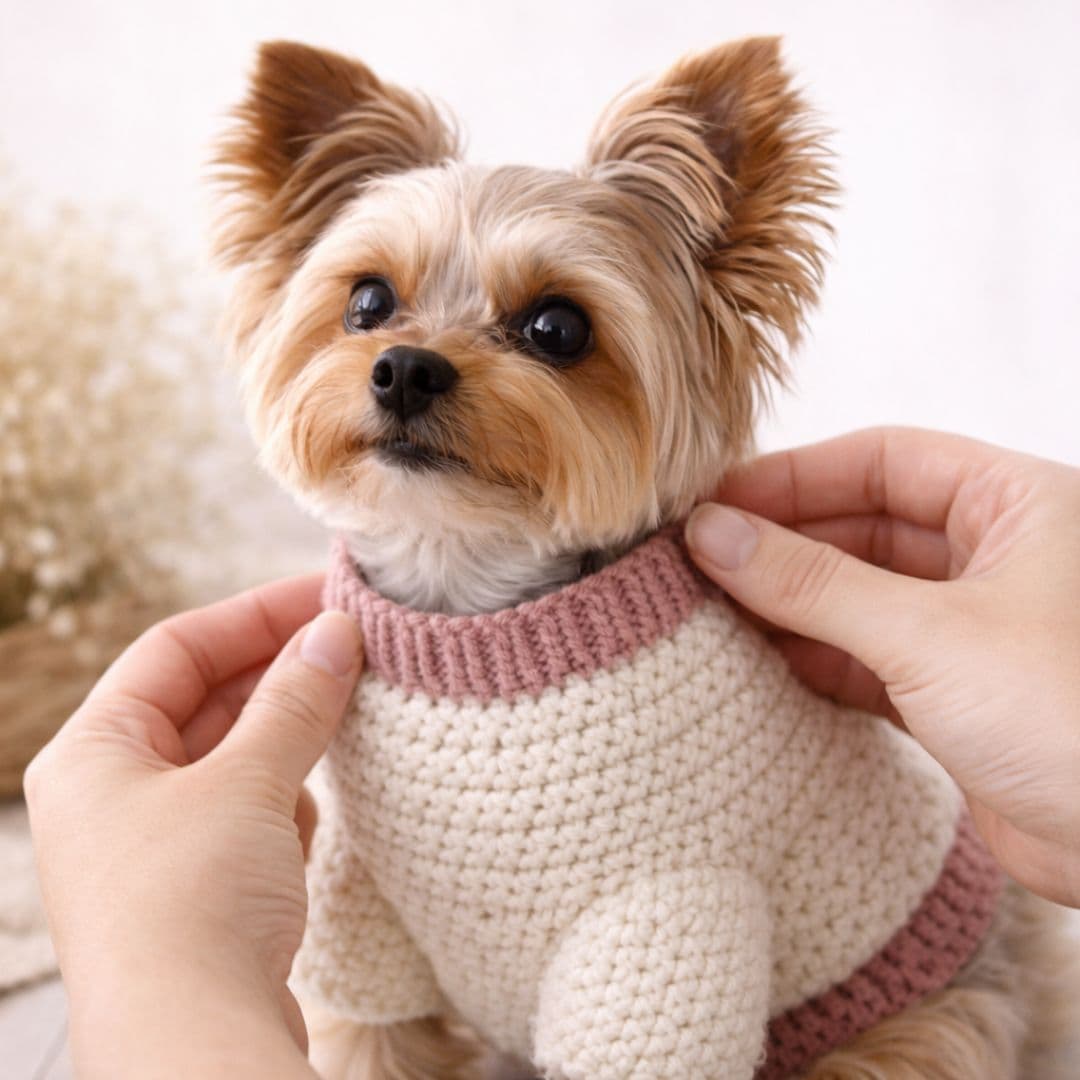
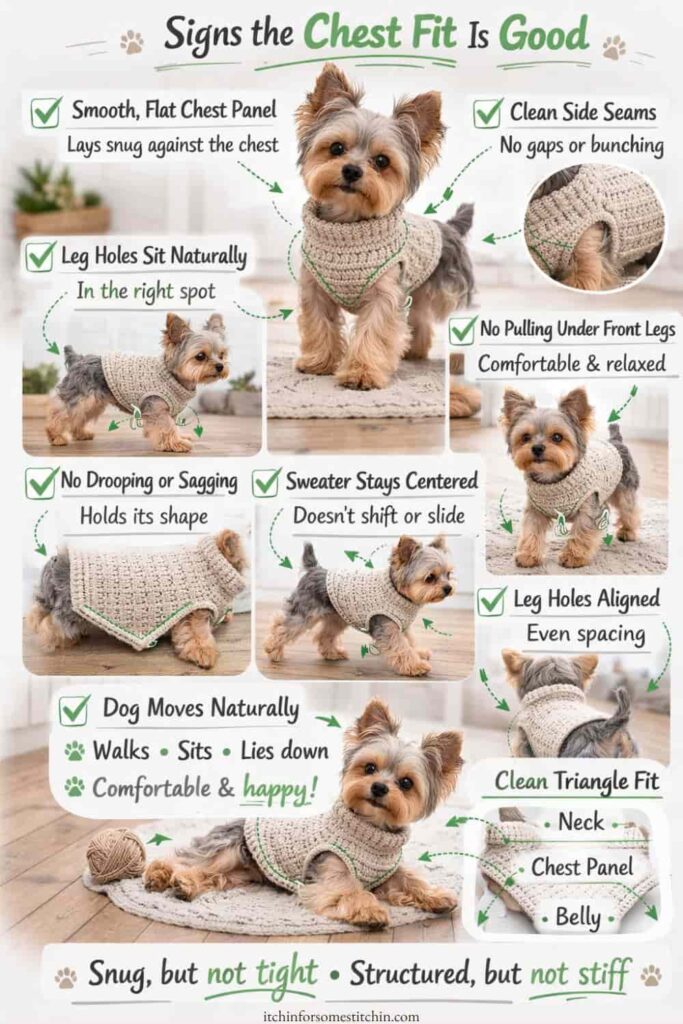
What a Perfect Chest Fit Looks Like
This is the sweet spot. The “tailored but comfy” zone.
A well-fitted chest piece should:
- Sit snug against the chest without pulling
Close fit, but no tension or strain. - Meet the back piece cleanly at the sides
No gaps, no overlap, no bunching. - Keep leg holes properly aligned
Openings sit naturally at the shoulders, not pulled in or pushed out. - Stay in place when the dog moves
No twisting, sliding, or riding up. - Allow full, natural movement
Your dog walks, sits, and stretches like nothing’s there. - Follow the natural shape of the body
The triangle panel should taper smoothly from chest (wide) to neck (narrow), just like the pattern intends .
In short: just right = structure + comfort + clean lines
Adjusting Chest Width in Sweaters With a Separate Chest Piece
Some dog sweaters include a separate chest panel that is crocheted individually and then sewn to the back piece.
In these designs, the chest section usually:
• starts at the belly
• works toward the neck
• gradually decreases to form a triangle
This triangle allows the sweater to wrap comfortably around the dog’s chest while leaving space for the legs.
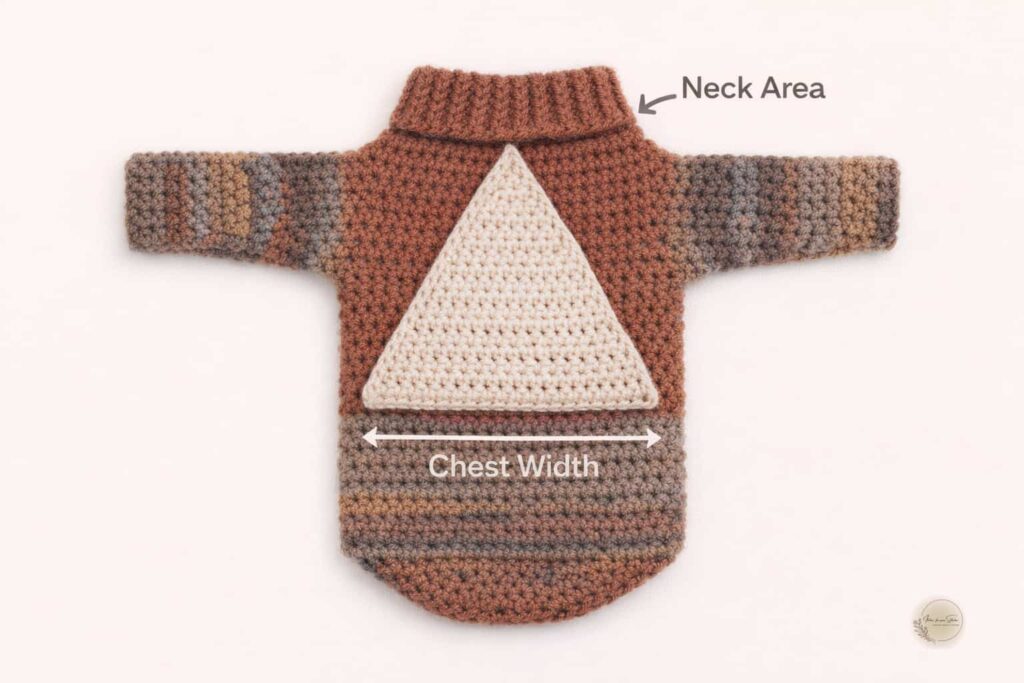
For example, in the Quick & Easy Small Dog Sweater, the chest section begins with a foundation chain and then decreases toward the neck to form a triangular shape.
Because the chest piece is triangular, the starting chain determines the width of the chest.
Method 1: Making the Separate Chest Piece Wider
If your dog has a broad chest, the sweater may feel tight under the front legs or across the belly.
To increase the chest width:
- Add stitches to the starting chain.
- Follow the same stitch pattern used in the pattern.
- Continue the decrease rows exactly as written.
Example
Original pattern:
Chain 18
Row 1: DC across (16 stitches)
Wider chest adjustment:
Chain 22
Row 1: DC across (20 stitches)
This creates a wider triangle so the sweater wraps farther around the dog’s chest before it is seamed to the back piece.
Method 2: Making the Separate Chest Piece Narrower
Some dogs are slimmer through the chest and belly. If the chest piece is too wide, the sweater may sag or twist underneath.
To narrow the chest section:
- Reduce the number of stitches in the starting chain.
- Follow the pattern exactly the same afterward.
Example:
Original pattern:
Chain 18
Narrower chest adjustment:
Chain 14
The triangle shape will remain the same, but the base of the triangle will be smaller.
Understanding the Triangle Shape
In many dog sweater patterns, the chest section gradually decreases until it reaches the neck area.
In the Quick & Easy Dog Sweater pattern, decreases are made using sc2tog at the beginning and end of each row, which tapers the chest panel into a triangle shape.
This shaping allows the sweater to:
• narrow toward the neck
• sit comfortably between the dog’s legs
• attach smoothly to the back panel.
Common Mistake to Avoid
When adjusting chest width, it’s easy to change the wrong part of the pattern.
The most common mistake is:
• Changing the decrease rows instead of the starting chain
This might seem like a quick fix, but it actually changes the shape of the chest section—not just the size.
What happens if you do this:
• The chest panel loses its intended shape
• The taper toward the neck becomes uneven
• The sweater may twist, pull, or fit awkwardly
What to do instead:
Always adjust the starting chain (or stitch count at the widest point) and keep the decrease rows the same.
When adjusting chest width, the goal is simply to change the base of the triangle, not the shaping rows.
This preserves the shaping while simply resizing the chest section to fit your dog.
Simple Rule for Adjusting Chest Panels
When adjusting chest width in triangular chest pieces:
Change the starting chain, not the decrease rows.
This keeps the shaping correct while allowing the sweater to fit different chest sizes.
Think of the chest piece like a triangle:
Base of the triangle = chest width
Top point of the triangle = neck opening
Changing the base changes the size while keeping the overall shape intact.
Adjusting Chest Width in Sweaters Without a Separate Chest Piece
Not all crochet dog sweaters use a separate chest panel. Many patterns are worked in one continuous piece, either:
• top-down from the neck
• bottom-up from the belly
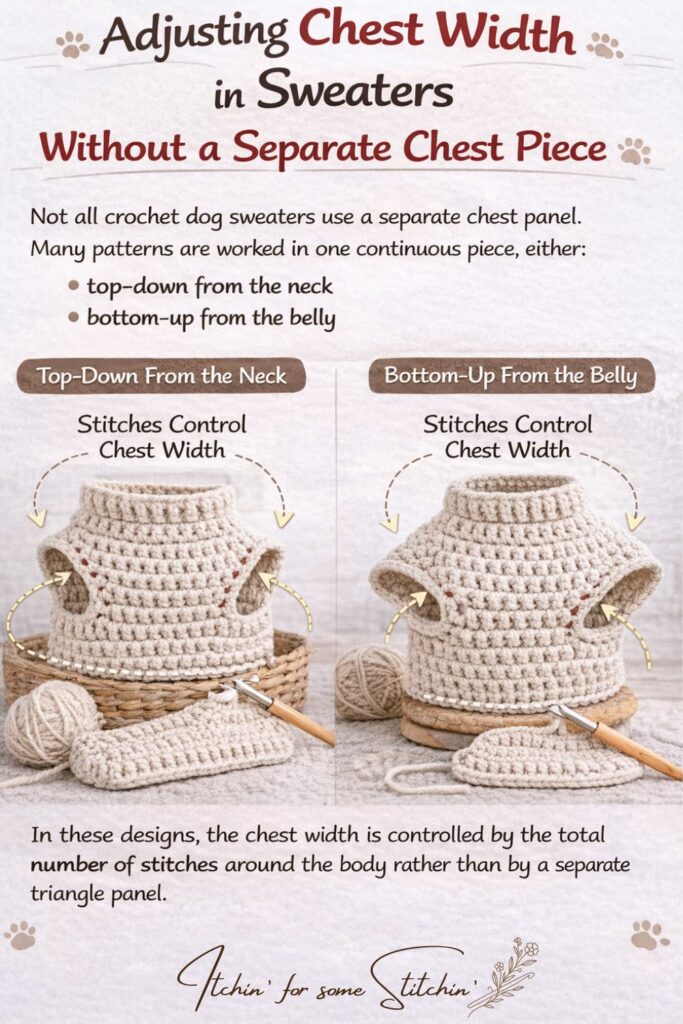
In these designs, the chest width is controlled by the total number of stitches around the body rather than by a separate triangle panel.
Method 3: Adjusting the Starting Chain (Bottom-Up Sweaters)
Some sweaters begin with a foundation chain that wraps around the dog’s chest.
To widen the sweater:
• add stitches to the starting chain
• keep stitch multiples consistent with the pattern
To narrow the sweater:
• reduce the starting chain
• maintain the correct stitch multiple
Even a small adjustment of 2–4 stitches can significantly change the fit.
Important: Always adjust in stitch multiples required by the pattern (for example, multiples of 2 or 4), or your stitch pattern may not line up correctly.
Method 4: Adjusting the Neck Foundation (Top-Down Sweaters)
Top-down dog sweaters usually start at the neck and increase outward to form the chest and body.
In these patterns, the chest width is controlled by the increase rows.
To widen the chest:
• start with more stitches at the neckline
• or add additional increase rows
To narrow the chest:
• begin with fewer stitches
• reduce the number of increases
This works similarly to crocheting a top-down sweater for people.
Note: Make sure any added stitches still follow the pattern’s stitch multiple.
Method 5: Adjusting Underarm Chains
Some seamless dog sweaters create leg openings and then add chains underneath the dog’s chest to form the belly section.
Example structure:
Crochet across the back
Chain under the arm
Skip the leg opening
Continue across
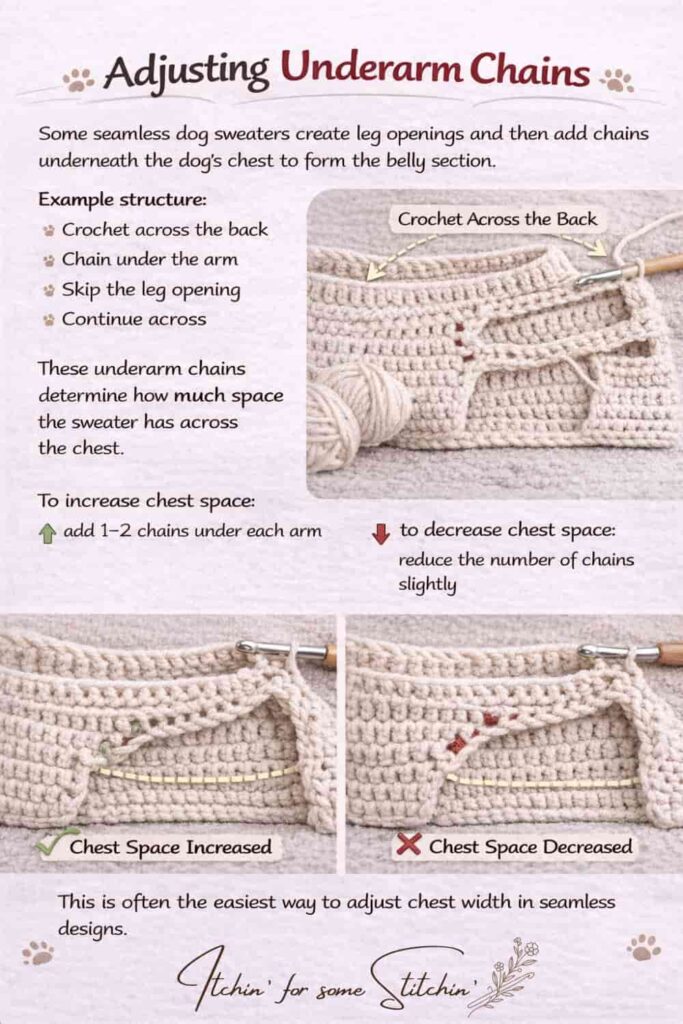
These underarm chains determine how much space the sweater has across the chest.
To increase chest space:
• add 1–2 chains under each arm
To decrease chest space:
• reduce the number of chains slightly
This is often the easiest way to adjust chest width in seamless designs.
When to Check Fit
Making adjustments is much easier when you check the fit at the right stages—before everything is fully finished.
Here are the best times to test your dog’s sweater fit:
• After completing the chest panel (before seaming)
This is the most important checkpoint for sweaters with a separate chest piece. You can easily see if the panel is too narrow or too wide before attaching it to the back.
• After joining underarm chains (for seamless designs)
At this stage, the sweater starts forming the body. Try it on your dog to check how the chest and leg openings feel before continuing.
• Before finishing the body length
Do a final fit check to make sure everything sits correctly and comfortably before completing the sweater.
Taking a minute to check the fit during these stages can save you from having to redo large sections later.
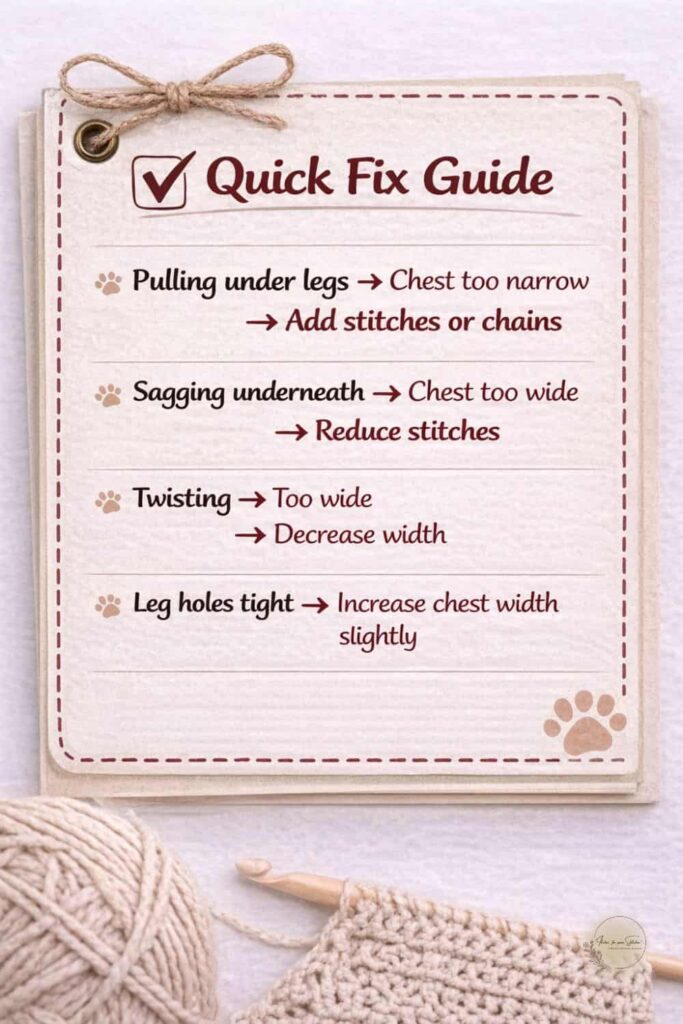
Common Chest Fit Problems
Sweater pulls under the legs
Cause: chest section too narrow
Fix: increase starting chain or add stitches
Belly panel does not reach the sides
Cause: chest width too small
Fix: widen the chest section
Sweater twists underneath
Cause: chest piece too wide
Fix: reduce chest stitches
Don’t Forget Ease
Dog sweaters should never fit skin-tight.
You should be able to slide 1–2 fingers comfortably between the sweater and your dog’s chest so they can:
• walk comfortably
• run and play
• lie down easily
If the sweater restricts movement, it usually needs a little more chest room.
Always Measure Your Dog First
Before adjusting a crochet dog sweater pattern, it’s important to measure your dog correctly.
The most important measurements are:
• chest circumference
• neck circumference
• back length
If you need help measuring your dog, check out my guide on How to Measure a Dog for a Crochet Sweater, where I walk through the process step-by-step.
Need Help Planning the Perfect Dog Sweater Fit?
If you want help figuring out your dog’s measurements, fit needs, and sweater adjustments before you start crocheting, my free Dog Sweater Fit Planner can help. It’s a simple printable designed to help you plan for chest size, back length, and overall fit before you begin.
Frequently Asked Questions About Adjusting Dog Sweater Chest Width
Have questions while learning how to adjust crochet dog sweater chest width? These FAQs cover the most common concerns and tips for success.
Part of the Dog Sweater Fit System
This tutorial is part of my Dog Sweater Fit System, a series of guides designed to help you customize crochet dog sweaters for the perfect fit.
Other guides in the series include:
• How to Measure a Dog for a Crochet Sweater
• Adjusting Dog Sweater Back Length
• How to Adjust the Collar for a Crochet Dog Sweater
Once you understand these simple adjustments, you’ll be able to modify almost any crochet dog sweater pattern with confidence.

Thank you
I sincerely appreciate you visiting my website! By sharing my content and/or making a purchase you are making it possible for me to continue producing and sharing free content for everyone to enjoy. Your support is amazing!