10 Crochet Tips for Beginners (Make Crochet Easier)
Disclosure: This post may contain affiliate links. If you make a purchase through these links, I may earn a small commission at no additional cost to you.
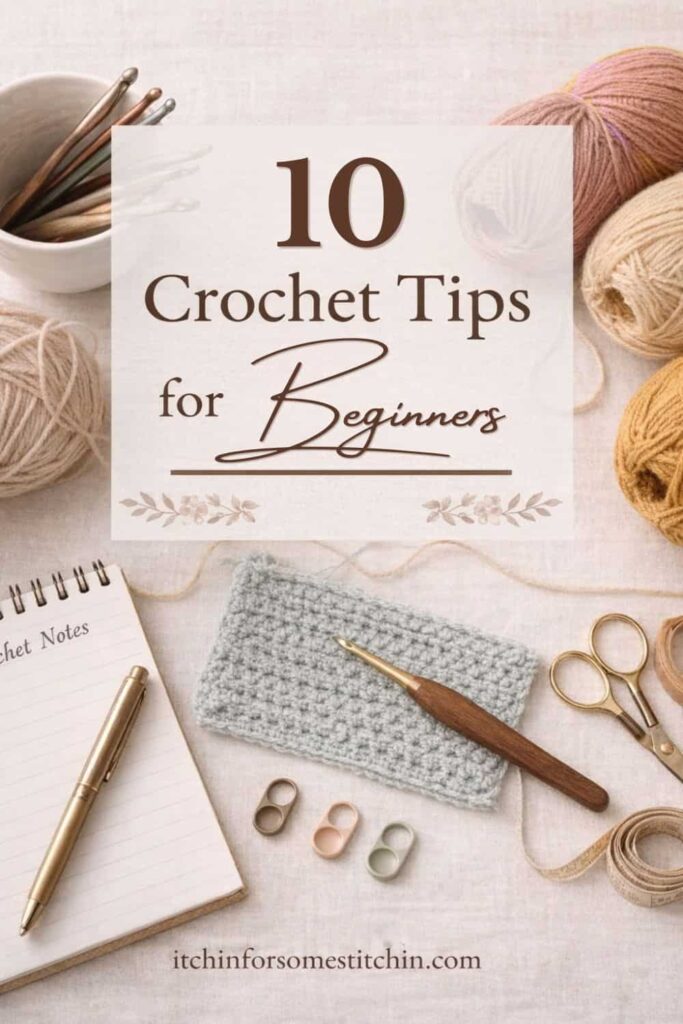
Follow these 10 crochet tips for beginners before you start your first project
If crochet feels harder than it should, you are not alone.
These crochet tips for beginners will help you avoid common mistakes, feel more confident, and make learning crochet much easier from the start.
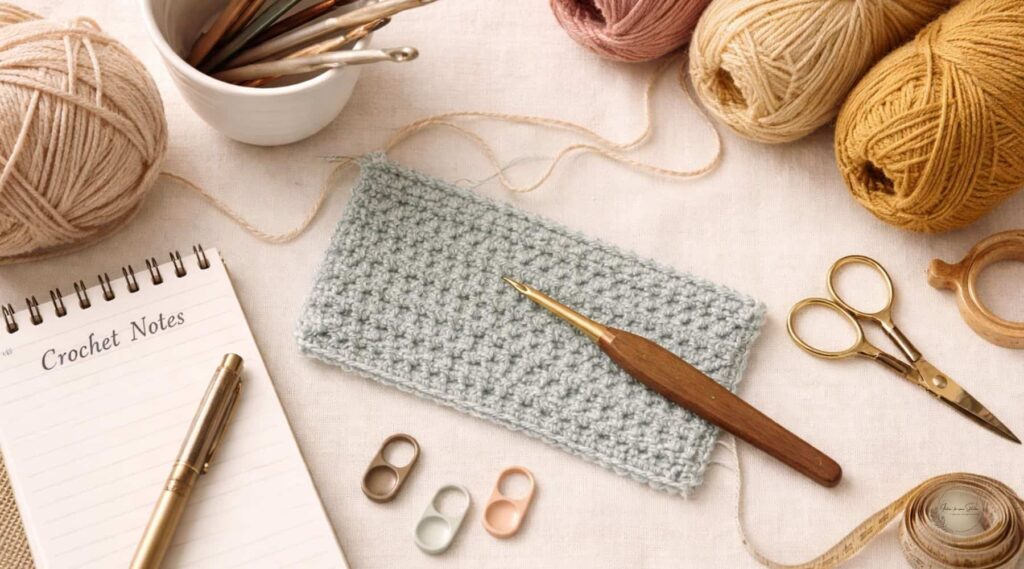
When I first started crocheting, I had no idea what I was doing.
I did not know what yarn to use, what hook to start with, or even what a stitch really was. Like many beginners, I was trying to teach myself by searching online, reading tutorials, and watching videos. I could find plenty of information, but it was much harder to find simple, practical crochet tips for beginners that actually made the learning process easier.
Looking back, crochet itself was not the hardest part.
The hardest part was not knowing the little things that make everything click, like how to choose the right yarn, how to hold the hook comfortably, or why stitches can suddenly become too tight.
That is exactly why I put this post together.
If you are new to crochet, these beginner crochet tips will help you avoid frustration, fix common problems, and start with a much better foundation.
Table of Contents
Love Pinterest? I do!
Save this post for Later and follow all my boards.
Why Crochet Feels So Hard at First
If you have ever wondered why crochet feels confusing in the beginning, you are not doing anything wrong.
Most beginners struggle with the same things. They use yarn that is hard to work with, hold the hook in an uncomfortable way, make their foundation chain too tight, miss stitches at the end of rows, or choose projects that are too advanced for their current skill level.
The good news is that these are normal crochet beginner mistakes, and most of them are easy to fix once you know what to look for.
The crochet tips and tricks for beginners below will help you start in a way that feels simpler, smoother, and far less overwhelming.
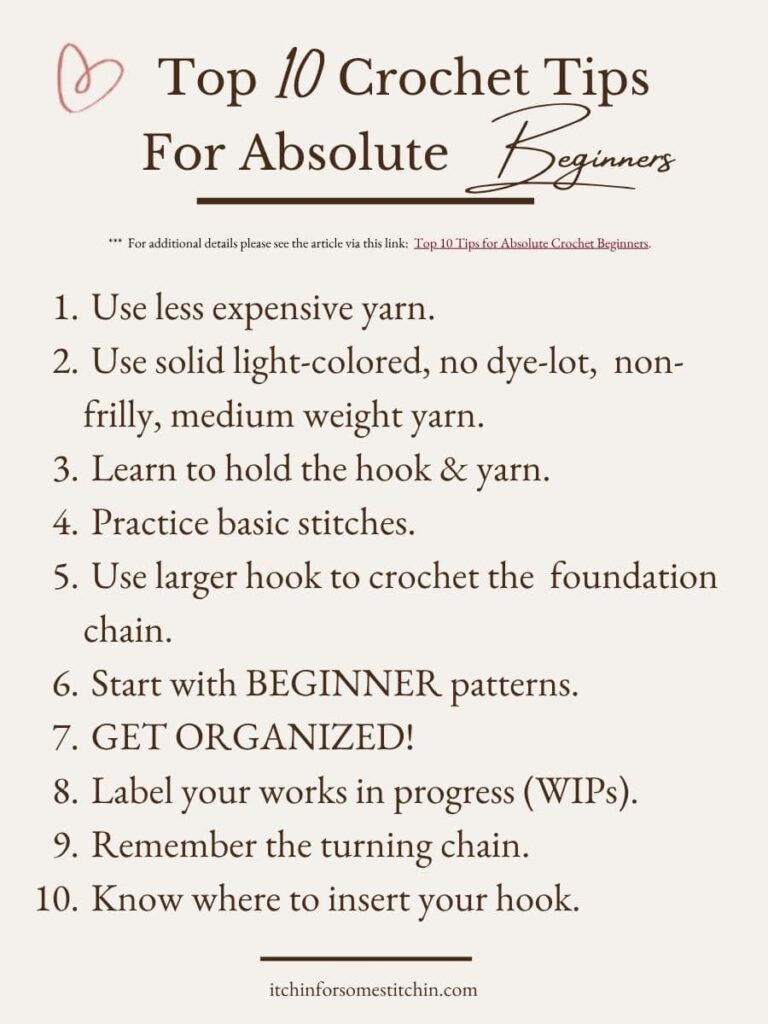
Crochet Tips for Beginners at a Glance
1. Start With Inexpensive Yarn
One of the best crochet tips for beginners is to avoid spending too much on yarn at the start.
When you are learning, mistakes are part of the process. You will likely pull stitches out, redo rows, and restart projects more than once. That can leave yarn stretched out, fuzzy, or frayed, especially while you are still learning tension and stitch placement.
Using less expensive yarn gives you room to practice without worrying about wasting money on mistakes.
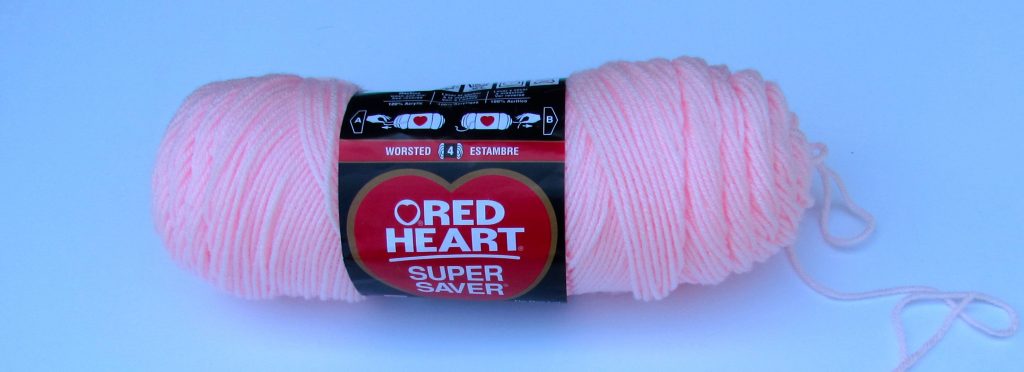
A basic acrylic yarn, like Red Heart Super-Saver and Caron One-Pound yarns, are good first choices. is often a smart place to start. It is affordable, easy to find, and durable enough to handle practice. This is not the time for luxury fibers, specialty textures, or yarns that are difficult to frog.
If your goal is to learn how to crochet for beginners in the easiest way possible, start simple.
2. Choose Light-Colored, Smooth Yarn in a Medium Weight
If I could give only one piece of advice to new crocheters, this might be it.
Light-colored yarn makes it much easier to see your stitches. Dark yarn, heavily variegated yarn, fuzzy yarn, and novelty yarn can make even simple rows look confusing. When you are still learning where to insert your hook, visible stitches matter.
A smooth, solid-colored worsted weight yarn is one of the best choices for beginners. It is usually labeled as a medium weight or weight 4 yarn. This weight is large enough to see clearly but not so bulky that it becomes awkward to handle.
Try to avoid yarns with sparkles, thick-and-thin texture, loops, crinkles, or embellishments until you feel more confident. Those yarns can be beautiful, but they are not ideal when you are learning the basics.
These kinds of easy crochet tips for beginners may seem small, but they make a huge difference in how quickly crochet starts to feel manageable.
Not sure which yarn to choose?
If you’ve ever stood in the yarn aisle wondering what “weight,” “fiber,” or “texture” actually means, you’re not alone.
I put together a complete guide that walks you through how to choose the right yarn, what different yarn weights mean, and how fiber affects your finished project.
Read: Guide to Yarn – Weight, Fibers, and How to Choose It
It also includes a step-by-step masterclass if you want a deeper understanding of how yarn really works in your crochet.
3. Find the Most Comfortable Way to Hold the Hook and Yarn
There is no single right way to hold a crochet hook.
Some people naturally prefer holding the hook like a knife. Others prefer holding it like a pencil. The same goes for yarn tension. What matters most is choosing a method that feels comfortable, stable, and easy to repeat.
A lot of beginners assume they must hold the hook exactly like the person in a video. That is not true. Crochet should feel controlled, not strained. If your grip feels awkward, stiff, or tiring, you may simply need a different hold.
This is one of those crochet tips and tricks for beginners that can change everything. A better hold can improve control, tension, comfort, and confidence all at once.
Need help with this part? Read:
4. Practice Basic Stitches Before You Jump Into Patterns
One of the biggest crochet beginner mistakes is trying to follow full patterns before the basics feel comfortable.
Before you start your first real pattern, spend some time practicing the foundation chain, single crochet, and double crochet. These stitches show up again and again in beginner projects, and getting comfortable with them will make everything else easier.
You do not need to make anything fancy while you practice. A simple swatch, scarf, dishcloth, or small rectangle is enough. The goal is not to make something perfect. The goal is to build muscle memory and start recognizing how stitches look.
When you give yourself time to practice first, patterns make more sense later.
If you are trying to learn how to crochet for beginners, this step is worth slowing down for.
5. Use a Larger Hook for Your Foundation Chain
The foundation chain is often one of the hardest parts for beginners.
Many new crocheters make their chain too tight without realizing it. Then the first row becomes difficult to work into, and the edge of the project can pull or curve. This is extremely common.
A simple fix is to use a hook that is one size larger just for the foundation chain. After the chain is complete, switch back to the hook size recommended for the project.
That one small change can make the first row much easier and improve the overall look of the project.
This is one of the most helpful crochet tips for beginners because it solves a frustration point that causes many people to quit too early.
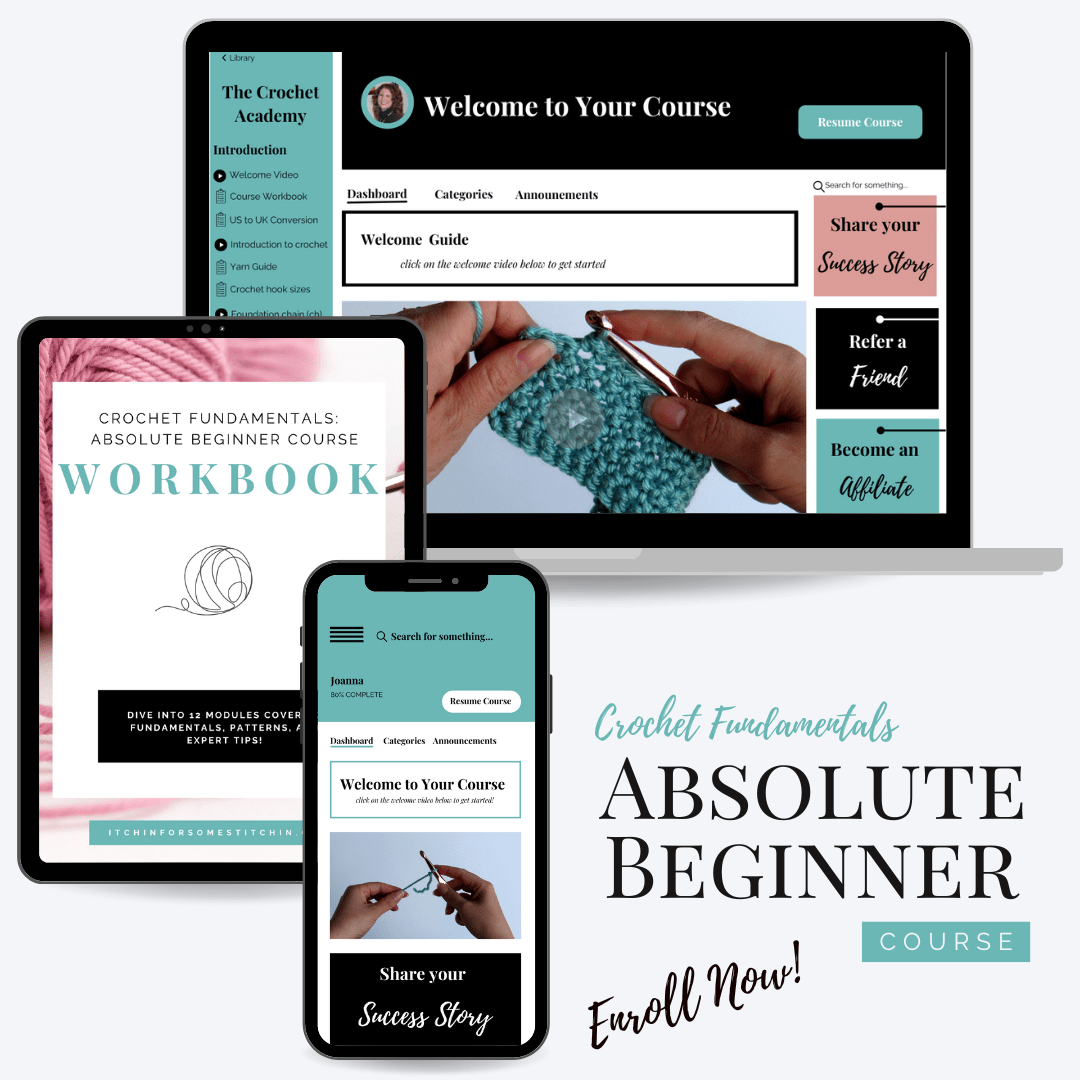
If you want step-by-step help with the basics, including chaining, stitches, and beginner setup, take a look at my Beginner Crochet Course.
6. Choose a True Beginner Project, Not Just an “Easy” One
Not every project labeled easy is actually beginner-friendly.
That is an important distinction.
A true beginner project uses basic stitches, minimal shaping, simple construction, and clear instructions. An easy project may still assume that you already know how to count stitches, maintain straight edges, change colors, or read pattern abbreviations.
When choosing your first pattern, look for something made with one or two basic stitches and very little complexity. Scarves, washcloths, simple blankets, and straightforward accessories are often much better starting points than fitted garments or highly textured designs.
If you are looking for crochet tips for beginners because you feel overwhelmed by patterns, this may be the reason. The problem may not be your skill. It may be that the project is too advanced for where you are right now.
Not sure what to make first?
If you’re feeling overwhelmed by patterns or unsure where to start, I put together a simple step-by-step guide to help you move forward with confidence.
9 Must-Know Steps for Crochet Beginners
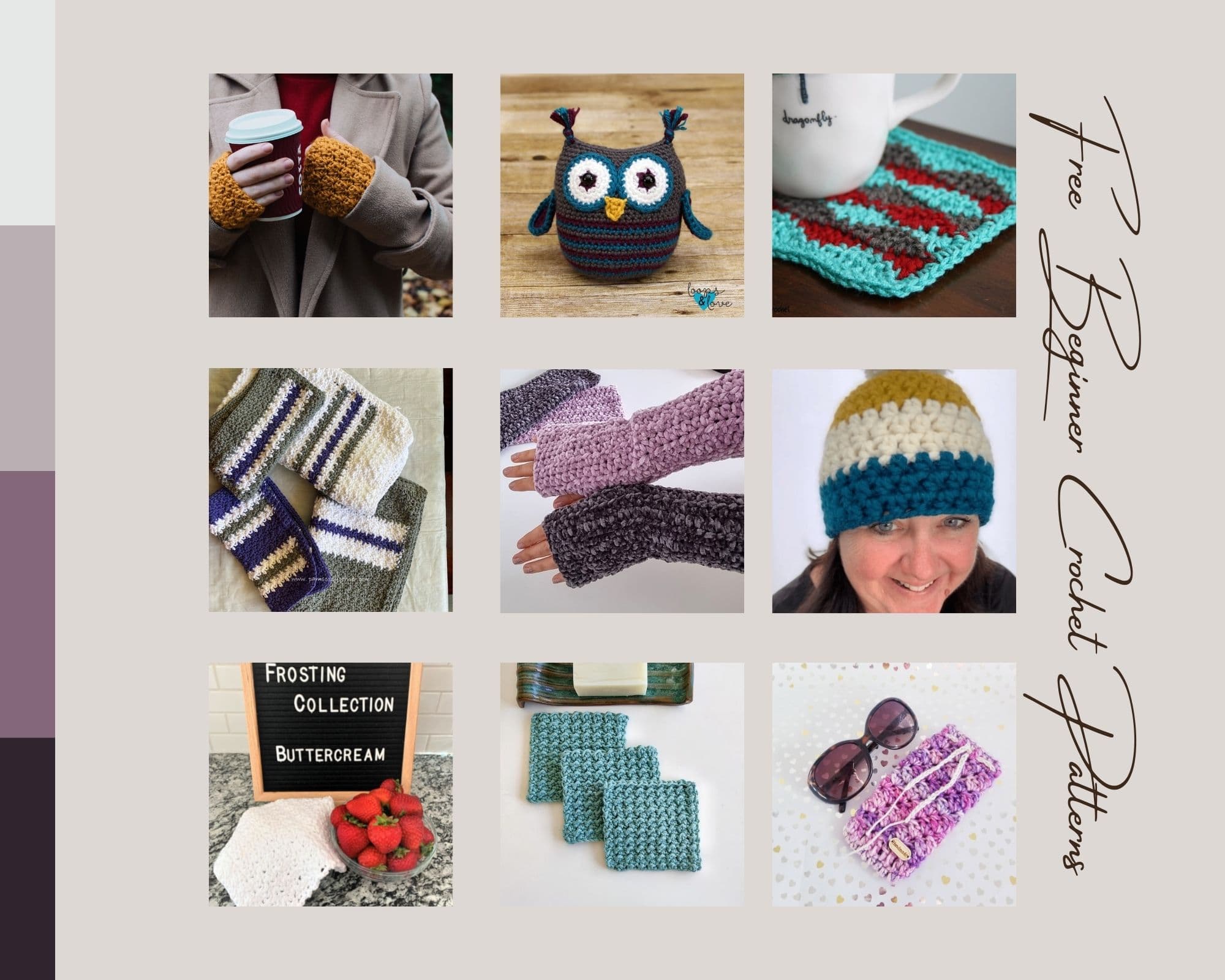
It walks you through exactly what to focus on first — and includes links to some of my most popular beginner-friendly crochet patterns so you can start with something simple and actually enjoyable.
7. Stay Organized From the Start
This is one of the most overlooked beginner crochet tips, but it matters more than people think.
It is very easy to forget which hook you were using, what yarn color you bought, what row you last completed, or where you saved the pattern. When everything feels new, a little organization can save a lot of frustration.
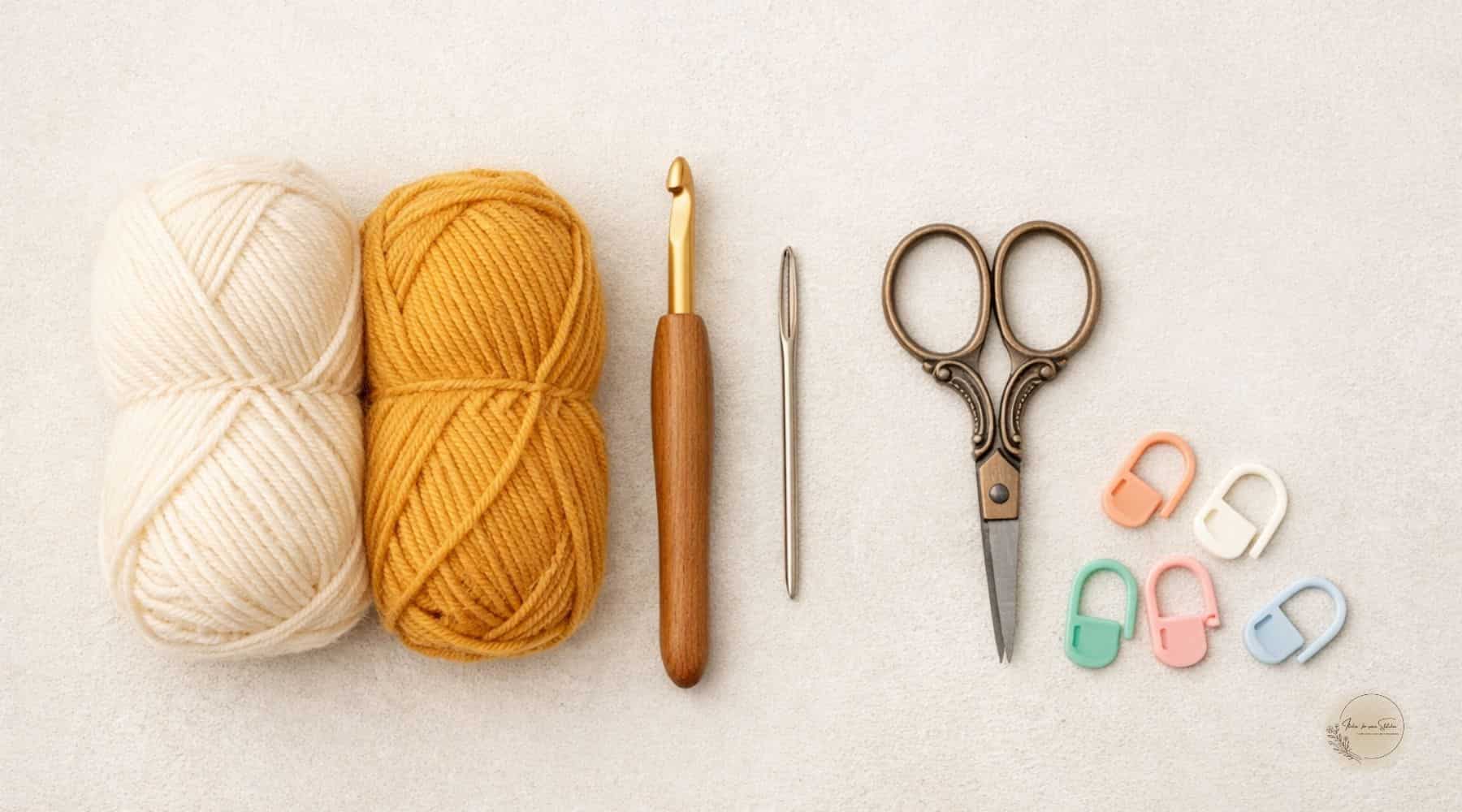
Keep your yarn, hook, scissors, pattern, and notes together in one project bag or basket. Even a simple system can make crochet feel much less chaotic.
It also helps to write down project details as you go, especially if you tend to set things aside and come back later.
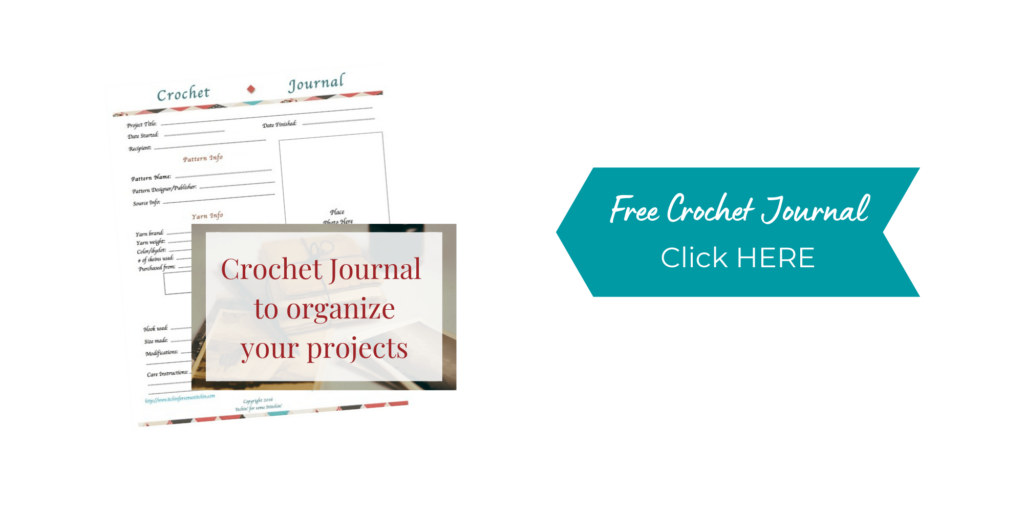
I created a free Crochet Project Planner to help you keep track of your yarn, hook size, pattern notes, and progress.
And if you prefer your patterns, tutorials, and learning resources already organized for you in one place, that is exactly what I built inside The Crochet Conservatory.
8. Keep Track of Where You Stop
Very few people finish a crochet project in one sitting.
That means you need a simple system for remembering where you left off. Otherwise, it becomes easy to lose track of row counts, repeat sections, or stitch placement.
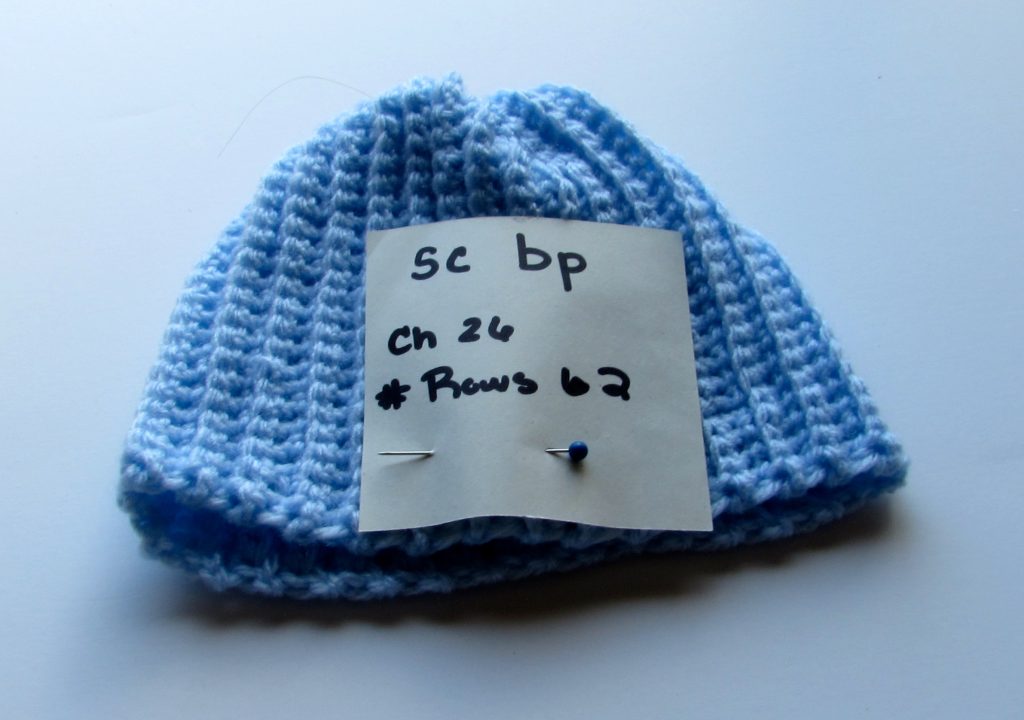
You can mark your place directly on the pattern, add a note in your planner, or attach a small piece of paper to the project with the row number written on it. Even something basic works well as long as you use it consistently.
This tip becomes even more important when you start modifying patterns or making your own designs.
Many crochet beginner mistakes happen after putting a project down and picking it back up later without a clear marker of where to continue.
9. Do Not Forget Your Turning Chain
A turning chain is easy to overlook, but it can affect the shape and stitch count of your project.
When you reach the end of a row, you usually need to chain one or more stitches before turning, depending on the stitch pattern you are using. That turning chain helps bring the yarn up to the correct height for the next row.
If you skip it, use the wrong number of chains, or misunderstand how it functions, your edges can become uneven or your stitch count can change.
This is one of the most common crochet tips for beginners because it solves a problem that shows up in almost every early project.
For a full explanation, read How to Crochet a Turning Chain for Beginners.
10. Learn Where to Insert Your Hook
This is one of the most important crochet tips for beginners, and one that does not get explained clearly enough.
Where you insert your hook affects how your stitches look, how your rows behave, and whether your project turns out the way it should. Depending on the stitch and the pattern, you may work under both loops, into one loop only, around the post, or into a specific chain or stitch space.
This is also where many beginners start to feel confused.
You might accidentally work into the wrong stitch, skip stitches near the turning chain, or add extra stitches without realizing it. This can lead to uneven edges, slanted rows, or a project that just doesn’t look quite right.
The tricky part is that all of these issues are connected.
- Stitch placement
- Stitch counting
- Row counting
They all work together.
Once you understand how to see your stitches and count them correctly, everything becomes much easier to follow and fix.
Want help seeing your stitches more clearly?
If you’ve ever wondered:
- “Am I in the right stitch?”
- “Why do my edges keep changing?”
- “Where did that extra stitch come from?”
I walk through all of this step-by-step in my free video masterclass:
How to Count Stitches and Rows in Crochet
You’ll learn how to:
- identify each stitch clearly
- count stitches without losing your place
- keep your rows even and consistent
Common Crochet Beginner Mistakes to Watch For
Even with the best intentions, most beginners run into a few predictable problems.
If your crochet is not turning out the way you hoped, check for these common issues:
- stitches that are too tight
- uneven row edges
- missed stitches at the beginning or end of rows
- yarn that is too dark or textured to see clearly
- choosing projects that are too advanced
- forgetting the turning chain
- inserting the hook in the wrong place
The encouraging part is that these are all normal. They do not mean you are bad at crochet. They usually just mean you need a few better starting habits.
That is exactly what these crochet tips for beginners are meant to help with.
Even with the best intentions, most beginners run into a few predictable problems.
If your crochet is not turning out the way you hoped, check for these common issues:
- stitches that are too tight
- uneven row edges
- missed stitches at the beginning or end of rows
- yarn that is too dark or textured to see clearly
- choosing projects that are too advanced
- forgetting the turning chain
- inserting the hook in the wrong place
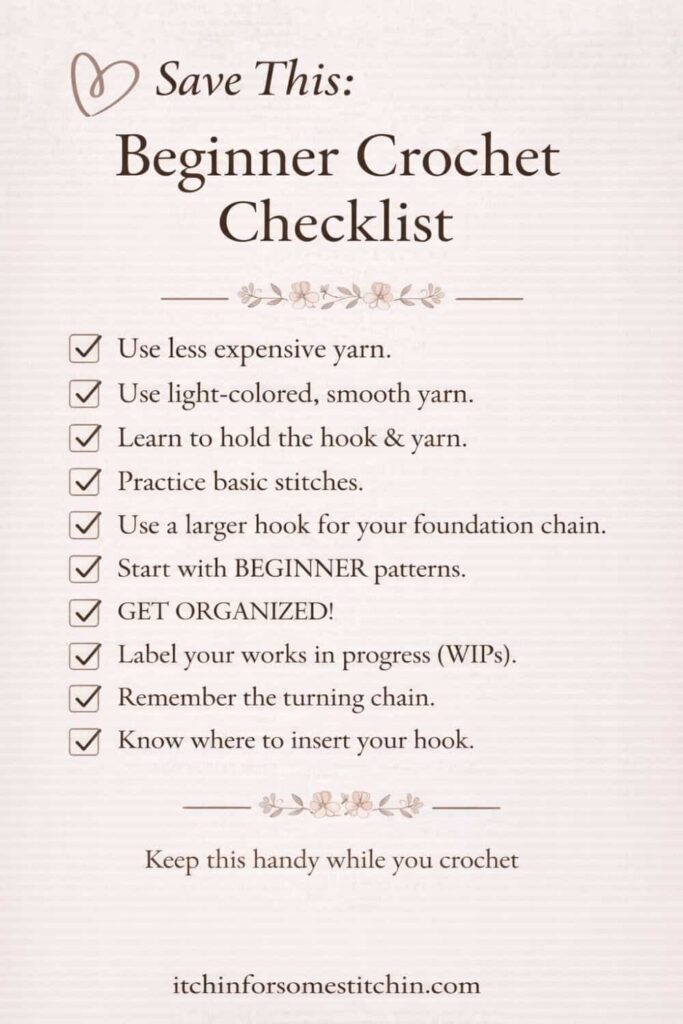
Want a simple checklist you can keep nearby?
If you’re the kind of person who likes having something quick to reference while you crochet, I created a printable checklist you can use as you work.
You can download it inside my free Fiber Stash resource library — just click below.
The encouraging part is that these are all normal. They do not mean you are bad at crochet. They usually just mean you need a few better starting habits.
That is exactly what these crochet tips for beginners are meant to help with.
Frequently Asked Questions: Crochet Tips for Beginners FAQ
Have questions while learning how to adjust crochet dog sweater chest width? These FAQs cover the most common concerns and tips for success.
Ready for Your Next Step?
If you are just getting started, here are a few simple ways to keep going.
Option 1
Want more beginner help?
Read 9 Must-Know Steps for Crochet Beginners
Option 2
Want step-by-step guidance in order?
Join my Beginner Crochet Course
Option 3
Want patterns and tutorials already organized for you?
Explore The Crochet Conservatory
Keep Going (You’re Closer Than You Think)
I hope these 10 crochet tips for beginners help make your first projects feel easier and less frustrating.
Every crocheter starts exactly where you are right now. Most of us learned through trial and error, figuring things out one stitch at a time. If you feel clumsy, confused, or slow, that is not a sign that you are doing it wrong. It is a sign that you are learning.
The beginning is where your foundation is built, and the small things you practice now will make everything easier as you continue.
If you found this helpful, feel free to save or share this post so you can come back to it later — or pass it along to someone else who is just getting started with crochet.
Thank you for being here and supporting my work. Every visit, share, and purchase helps me continue creating free crochet resources for beginners and beyond.
Thank you
I sincerely appreciate you visiting my blog! By sharing my content and/or making a purchase you are making it possible for me to continue producing and sharing free content for everyone to enjoy. Your support is amazing!
How do you count your stitches? You do a basic chain ok lets say 15 then you turn it and how do you count the next row if you chain up lets say two. Do you count every ststich menaing when you start in the second row where and how do you count the stiches to make 15. I juts dont get this.
Hi Marsha,
Okay... so if you've chained 15 for your foundation chain and then an extra 2 chains (17 in total), those extra 2 chains are called the turning chain and are NOT counted when you get to the next row. So, after you turn your work, count 2 chains (the 2 chains of your turning chain) and then insert your hook into the next chain (technically the 3rd chain) - this is where you start your count.
It may be helpful if you see a picture of what I am talking about. If you go to: https://www.itchinforsomestitchin.com/how-to-crochet/ and take a look at point #7 it should be very helpful for you.
If you are still struggling, please email me at [email protected] and/or join my Facebook group at https://www.facebook.com/groups/ItchinforsomeStitchin.Crochet/ for more help.
Thanks so much for stopping by!
Sincerely,
RaeLynn
Thank you for creating this list! As a beginner, I really needed to read this. I am attending my second crochet class tomorrow night, and all these tips make a difference. Have a nice day!
Hi there! I so glad you found this list valuable and I hope they help you as you gain more crochet experience. Best of luck in your class tomorrow night. I am sure you will have a great time and learn lots of new techniques & tips. Perhaps you may even stop back by and share a few things you have learned! Best wishes, RaeLynn.